Last updated: June 2026
Your camera works perfectly all day. The moment the sun sets and infrared kicks in, the feed drops, the camera reboots, and you spend the night with a dead security system. This is not a faulty camera. It is a physics problem that every UK installer encounters but few manufacturers acknowledge in their sales literature.
The Hidden Current Spike
When a PoE camera switches from day mode to night mode, its infrared LEDs draw significantly more current. A camera that idles at 5W during daylight can spike to 12-15W the instant IR activates. On a 48V PoE circuit, that means the current jumps from roughly 0.1A to 0.3A. According to Ohm's Law, voltage drop increases proportionally with current — triple the current, triple the voltage lost in the cable.
Most installers size their power budget based on the camera's average consumption, not its worst-case night-time draw. The camera boots during the day, passes initial tests, and passes the installation sign-off. Then dusk arrives, the IR fires up, the voltage at the camera end drops below the 42.5V minimum required by IEEE 802.3at, and the camera browns out and restarts.
Why Cat5e Fails Where Cat6 Succeeds
Cat5e cable (24 AWG) has a resistance of approximately 0.0842 ohms per metre. Cat6 (23 AWG) drops to 0.0668 ohms per metre. Over a 90-metre run, that difference adds up to roughly 1.6V of extra headroom — which is precisely the margin between a camera that holds its night-mode load and one that enters an endless reboot cycle.
CCA (Copper-Clad Aluminium) cable, commonly sold as budget Cat5e, makes this problem dramatically worse. Aluminium has 40% higher resistance than copper. A 90-metre CCA run delivering 0.3A to a night-vision camera can drop voltage by 5-7V more than the same length of pure copper Cat6.
The Heater Factor Nobody Considers
UK winters add another layer. Outdoor cameras with internal heaters draw additional current when the temperature drops below 0 degrees Celsius. A camera may need 15-20W just to keep its lens clear of ice, plus its IR load. Stack these two demands on a long cable run and the voltage drop can exceed 10V, pushing even a well-designed system into failure.
The symptom is baffling to homeowners: the camera works in summer, fails in winter, then works again in spring. They blame the camera. The camera is innocent. The cable is the culprit.

How to Calculate Your Real Distance Limit
Use this rule of thumb: for 802.3af (12.95W) devices, full 100m is generally safe on solid copper Cat5e. For 802.3at (25.5W) devices, limit runs to 80-90m. For 802.3bt Type 3 (51W) devices with IR and heater, keep runs under 60m or upgrade to Cat6A (22 AWG) cable.
Always power-cycle the camera at dusk during commissioning. If it survives the IR transition for 10 minutes, it will survive the winter. If it reboots, shorten the cable or add a midspan injector closer to the camera.
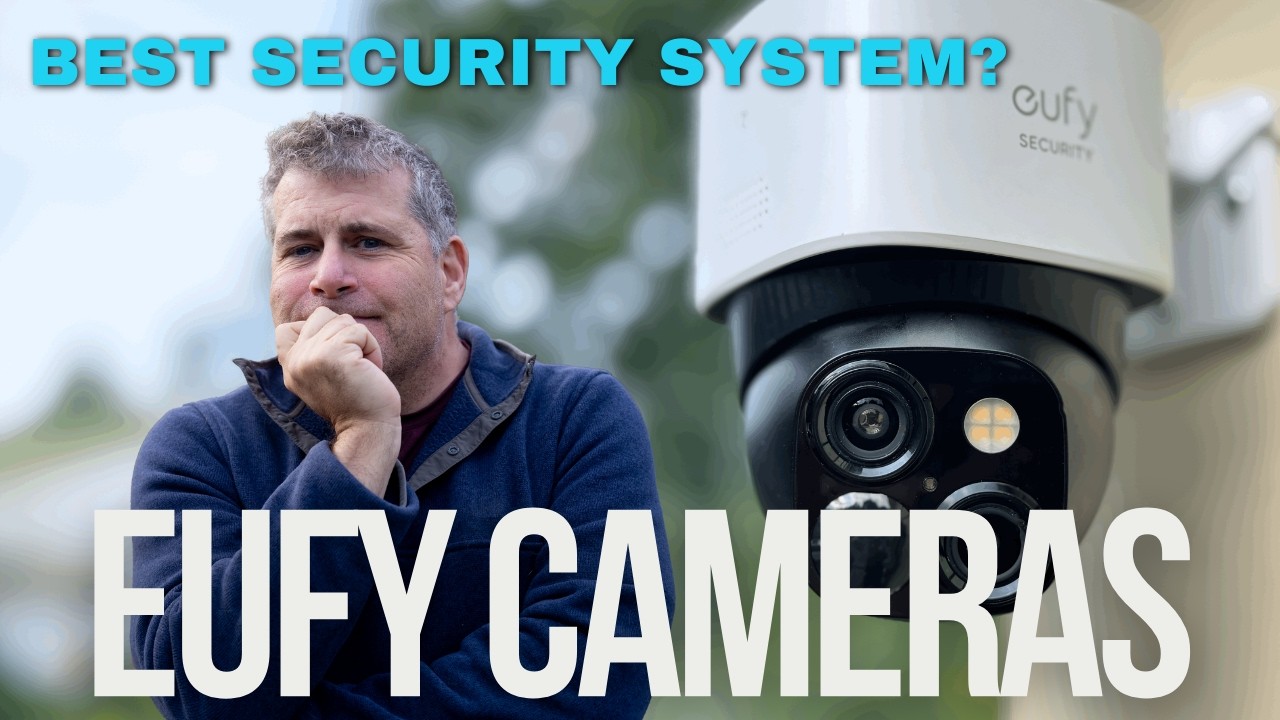
Video: Eufy Security Camera System: The BEST Home Security in 2025? — a practical walkthrough of the technology discussed in this guide.

Frequently Asked Questions
1. How do I test if voltage drop is causing my camera reboots?
Answer: Measure the voltage at the camera end using a multimeter while the camera is in night mode. If it reads below 42.5V for 802.3at or 37V for 802.3af, you have a voltage drop problem. The test must be done under load — idle voltage readings are meaningless. For more detail, see How to install CCTV for Pubs, Bars and Restaurants - UK step by step guide 2026. Also read our related guide: The Spider Web Problem: Why Your Night Vision CCTV Captures Nothing But Glowing Blur and What Actually Works. Browse our comprehensive CCTV knowledge base at CCTV Systems Guide. Official UK guidance on this topic: GOV.UK.
2. Can I fix voltage drop by using a higher-voltage PoE switch?
Answer: Some managed switches allow you to increase PSE output voltage up to 57V. This gives you about 5V of additional headroom over a standard 52V supply. However, exceeding 57V breaches SELV safety limits and may damage non-tolerant devices. For more detail, see Dental and Medical Practices CCTV - ultra-long-tail-legal (2026). Also read our related guide: Why CCTV Behind Glass Fails at Night: The Physics of IR Reflection Through UK Windows.
3. Does using both pairs (mode A and mode B) help with voltage drop?
Answer: Yes. 4-pair PoE (802.3bt) uses all four twisted pairs to deliver power, effectively halving the resistance compared to 2-pair delivery. If your camera and switch both support 4-pair PoE, you can extend your usable distance by roughly 30%. For more detail, see How much does Construction Sites CCTV cost in 2026? UK prices explained. Also read our related guide: The Ground Loop Problem: Why Horizontal Lines Roll Across Your CCTV Image and How to Fix Them Instantly.
4. Will a PoE extender solve my night-vision reboot problem?
Answer: A powered PoE extender placed at the 80m mark regenerates both data and power, effectively resetting the distance limit. This is often the simplest fix for existing installations where re-cabling is impractical. For more detail, see Does Retail Shops and Stores CCTV reduce insurance premiums in 2026? UK guide. Also read our related guide: Why Your AI Security Camera Flags a Washing Line as a Person: The Training Data Blind Spot.
5. Does cable temperature affect voltage drop in UK winters?
Answer: Significantly. Copper resistance increases by approximately 0.4% per degree Celsius. A cable running through a loft at 40 degrees Celsius in summer versus 0 degrees in winter can see a 16% swing in resistance. This is why some systems fail only in cold weather. Also read our related guide: The 100-Metre PoE Myth: Why Your Outdoor Camera Fails at 70 Metres and How to Design Realistic Cable Runs.
Conclusion
The difference between a security system that works and one that frustrates is understanding the real-world behaviour of cameras, cables, and the environment they operate in. Manufacturers sell specifications. Installers solve problems. The questions above represent the issues that UK homeowners and businesses actually face — the ones the spec sheets do not mention.
Article by Gary Pearce, qualified security systems engineer. For a free security assessment, visit gary-pearce-home-services.pages.dev. This guide was last updated June 2026. Verify current UK regulations with the ICO.