Last updated: June 2026
A landmark UK court case in 2021 changed how domestic CCTV and smart doorbells are treated under data protection law. Fairhurst v Woodard established that a Ring doorbell capturing a neighbour's garden and shared areas is not exempt from GDPR under the 'household exemption'. Yet most UK homeowners with smart doorbells remain unaware that their device has potentially turned them into a data controller with legal obligations they are likely ignoring.

What Fairhurst v Woodard Actually Established
In 2021, the High Court ruled that Mr Woodard's Ring doorbell and security cameras breached Dr Fairhurst's data protection rights. The cameras captured footage of Dr Fairhurst's garden and a shared parking area. The court held that this went beyond 'purely personal or household purposes' — the exemption that normally protects domestic CCTV from GDPR compliance.
The key finding: the domestic exemption only applies when your cameras capture exclusively your own property. The moment your camera's field of view includes any part of a neighbour's property, a shared space, or a public area, you become a data controller under UK GDPR. This is not theoretical. It is enforceable law established by a British court.
What This Means for Your Smart Doorbell
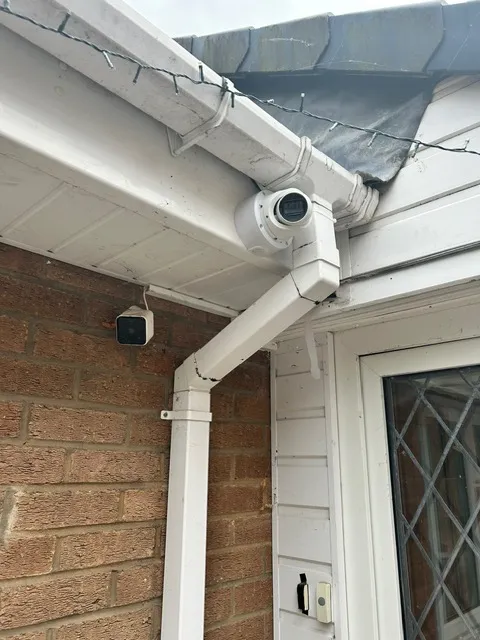
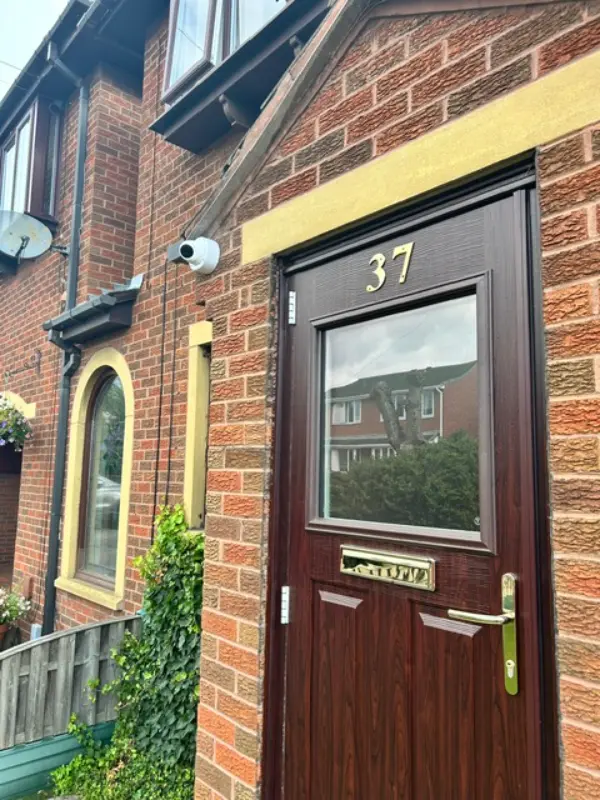
A Ring doorbell that captures your front door, your driveway, and half your neighbour's front garden is capturing personal data of people who are not on your property. Under the Fairhurst precedent, this is not a 'household activity'. You are processing personal data and must comply with data protection principles.
Specifically: you must inform people they are being recorded (signage), you must respond to subject access requests (SARs) within one month, you must delete footage within a reasonable timeframe, and you must document your lawful basis for recording beyond your property boundary.
The Practical Steps Most Doorbell Owners Miss
Most Ring doorbell owners have done none of the following: registered as a data controller with the ICO (required if you capture beyond your boundary), displayed signage visible from the street, set privacy zones to mask neighbours' properties, implemented an automatic deletion policy for footage, or prepared a response template for subject access requests.
The ICO has stated it does not intend to pursue enforcement against every homeowner with a doorbell. But the legal framework exists and can be triggered by a single complaint from a neighbour who knows their rights.
How to Protect Yourself as a Doorbell Owner
If you own a smart doorbell or domestic CCTV that captures beyond your boundary: enable privacy masking in the camera settings to block your neighbour's property from view, display a small sign stating CCTV is in operation, set your video retention to auto-delete after 7-14 days, and familiarise yourself with how to respond to a SAR. These steps take 30 minutes and eliminate nearly all legal exposure.

Video: Total Facility Security Coverage at Silver Lion Farms | Customer Stories — a practical walkthrough of the technology discussed in this guide.
Frequently Asked Questions
1. Can I be fined by the ICO for my Ring doorbell?
Answer: The ICO prefers guidance over enforcement for domestic users. Formal enforcement actions against homeowners are rare. However, persistent non-compliance after receiving an ICO warning could result in enforcement, and civil action (like Fairhurst v Woodard) can result in court-ordered damages. For more detail, see How much does Self Storage Facilities CCTV cost in 2026? UK prices explained. Also read our related guide: BNC Connector Rot: The Single Most Common Failure Point in Analogue CCTV and Why It Always Fails at 2 AM. Browse our in-depth home security resource at Home Security Guide. Official UK guidance on this topic: ICO.
2. Does privacy masking in the Ring app fully protect me?
Answer: Privacy masking blocks the recorded image but does not prevent the camera from initially capturing the masked area. The camera still 'sees' the area before applying the mask. For full legal protection, physically angle the camera to exclude the neighbour's property rather than relying solely on software masking. For more detail, see Self Storage Facilities CCTV - cost-guide (2026). Also read our related guide: Why Your CCTV System Eats Hard Drives: The Surveillance-Grade vs Desktop Drive Truth.
3. What happens if my neighbour submits a SAR to me for my doorbell footage?
Answer: You must respond within one calendar month. Provide all footage containing their image or explain why you cannot. Failure to respond is a breach of UK GDPR. Prepare a simple template response in advance. For more detail, see Future of Gyms and Fitness Centres CCTV in 2026 - UK trends and technology. Also read our related guide: Why Rural CCTV Cameras Die Faster: The True Cost of UK Countryside Installation Nobody Advertises.
4. Does the Fairhurst ruling apply to all smart doorbells or just Ring?
Answer: The ruling applies to any camera-based smart doorbell or domestic CCTV system. The specific brand (Ring in this case) is irrelevant. The principle is about field of view and data capture, not the manufacturer. For more detail, see Future of Farms and Agricultural Property CCTV in 2026 - UK trends and technology. Also read our related guide: The Dawn Fog Problem: Why Your UK CCTV Camera Goes Blind Every Morning Between 5 and 7 AM.
5. If my camera only records when motion is detected, does that change my legal status?
Answer: No. Event-based recording still captures personal data when triggered. The legal status depends on what your camera records, not how it records it. A motion-activated doorbell that captures a neighbour's property is still a data controller. Also read our related guide: Why Wasps Build Nests Inside CCTV Camera Housings and How to Stop Them Without Poison.
Conclusion
The difference between a security system that works and one that frustrates is understanding the real-world behaviour of cameras, cables, and the environment they operate in. Manufacturers sell specifications. Installers solve problems. The questions above represent the issues that UK homeowners and businesses actually face — the ones the spec sheets do not mention.
Article by Gary Pearce, qualified security systems engineer. For a free security assessment, visit gary-pearce-home-services.pages.dev. This guide was last updated June 2026. Verify current UK regulations with the ICO.