Last updated: June 2026
It starts raining. Your phone explodes with motion alerts for the first 10 minutes. Then the alerts stop completely. A burglar could walk through your garden in the middle of a downpour and your camera would not fire a single notification. Your motion detection did not break. It was overwhelmed into submission by the physics of falling water.
The Pixel Saturation Problem
Pixel-based motion detection works by comparing successive video frames and identifying changes. Rain introduces thousands of moving, high-contrast objects across the entire frame simultaneously. The detection algorithm calculates motion vectors for every raindrop within its field of view — and runs out of processing capacity.
Once the buffer is full of raindrop motion vectors, the algorithm cannot distinguish new motion (like a person walking) from existing motion (rain). It effectively declares the entire frame as 'motion detected' and stops triggering new alerts. The camera appears to stop working because its detection capacity is saturated.
Why AI Detection Also Fails in Heavy Rain
AI person detection models rely on recognising human shapes and movement patterns. Rain distorts the image quality, reducing contrast and blurring edges. The AI confidence score for any object in the frame drops below the threshold. The AI cannot confirm a person is present because the rain has removed the visual information it needs to be confident.
Wind-driven rain that blows tree branches, bins, and garden furniture across the frame adds additional moving objects that the AI misclassifies. The AI processing pipeline becomes congested with these false positives, delaying or dropping real person detections.
The Rain Thresholds: When Detection Fails
Light drizzle: AI detects through rain with 80-90% accuracy. False alerts increase by 2-3x but detection remains functional. Moderate rain: AI accuracy drops to 50-70%. False alerts may trigger constantly or the system may become overloaded. Heavy rain: AI accuracy drops below 30%. Most cameras stop triggering alerts entirely. The detection pipeline is saturated. Rain + wind: Worst case. Combined motion vectors from rain and wind-blown objects exceed the algorithm's processing capacity.

What Professional Systems Do Differently
Commercial-grade video analytics use pre-processing filters that separate environmental motion (rain, snow) from object motion using frequency analysis. Rain creates high-frequency, low-amplitude pixel changes across the entire frame. A person walking creates low-frequency, high-amplitude changes in a localised area. By filtering out the high-frequency noise, professional analytics detect through rain reliably.
Consumer cameras rarely implement this filtering because it requires additional processing power that increases chip cost. The practical solution for UK homeowners is to accept that motion detection degrades in heavy rain and rely on continuous recording ('record always') as backup.
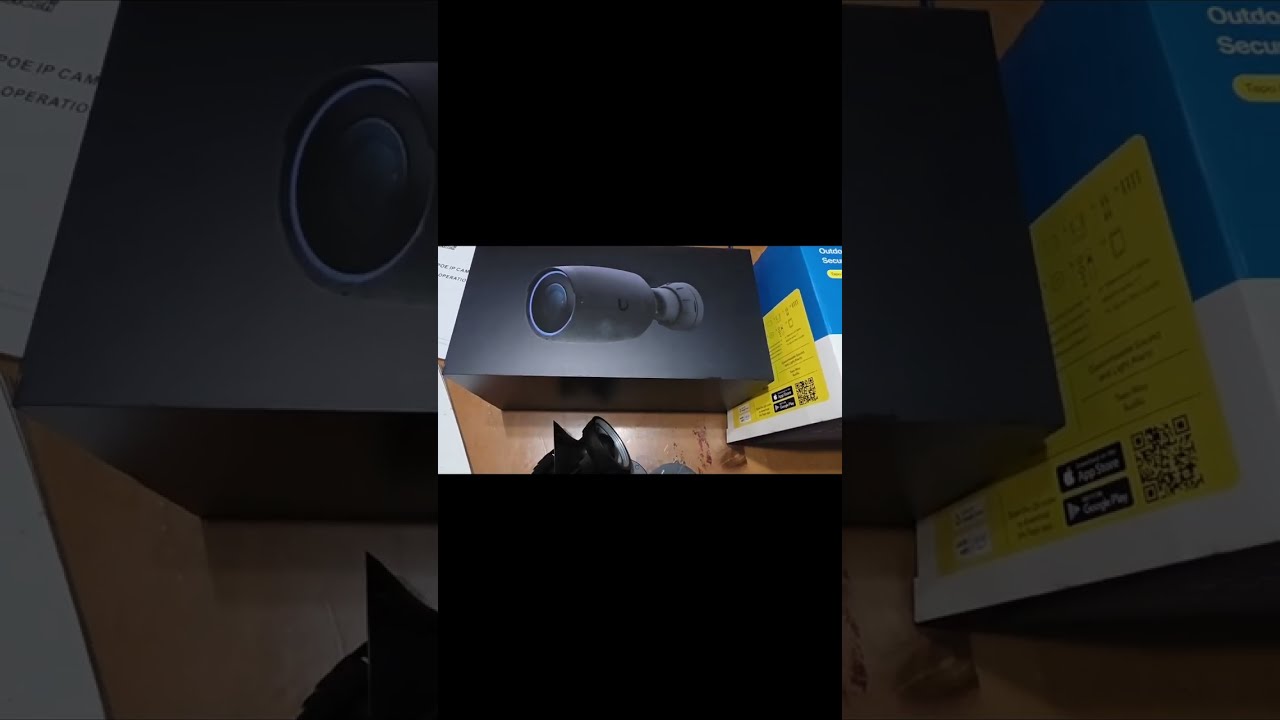
Video: Review of Unify AI Pro camera vs Tapo C520ws + Amcrest IPM-B1186EW — a practical walkthrough of the technology discussed in this guide.
Frequently Asked Questions
1. Will a camera with a rain guard or hood improve detection in rain?
Answer: Rain guards prevent raindrops from hitting the lens directly, which reduces the visual noise on the sensor. This can improve detection in moderate rain but does nothing for the broader environmental motion of rain throughout the scene. For more detail, see Can I record staff members in the changing rooms using CCTV? UK Retail Shops and Stores CCTV rules explained 2026. Also read our related guide: The Condensation Inside Your CCTV Dome: Why It Happens and Why Wiping It Makes It Worse. Browse our in-depth home security resource at Home Security Guide. Official UK guidance on this topic: ICO.
2. Does increasing motion sensitivity help detect through rain?
Answer: No. Higher sensitivity makes the camera more responsive to raindrop motion, which accelerates the saturation problem. The camera reaches its processing limit faster and stops triggering alerts sooner. For more detail, see How much does False Alarm Reduction CCTV cost in 2026? UK prices explained. Also read our related guide: Why 2.8mm Camera Lenses Are Ruining Your AI Person Detection: The Focal Length Truth Manufacturers Will Not Tell You.
3. Does lowering recording resolution help maintain detection in rain?
Answer: Lower resolution reduces the data the processor must analyse. A camera recording at 1080p may handle rain better than the same camera at 4K because there are fewer pixels to compare between frames. The trade-off is lower quality footage if a real event occurs. For more detail, see Can CCTV be used to monitor school playgrounds for anti-bullying purposes? UK Schools and Education Settings CCTV rules explained 2026. Also read our related guide: The AI Confidence Threshold Hack: Why Setting Your Detection to 80% Instead of 60% Changes Everything.
4. Will a radar-based detection system work in rain?
Answer: Radar-based sensors penetrate rain effectively because radio wavelengths are not scattered by water droplets the way light is. Radar-triggered camera systems are available at a premium (GBP 500+) and are the only detection technology that works reliably in all weather conditions. For more detail, see Future of Construction Sites CCTV in 2026 - UK trends and technology. Also read our related guide: Why ONVIF Profile G, Q, and T Matter: The Camera Compatibility Spec That Determines If Your NVR Actually Works.
5. Why does my camera detect rain for the first 10 minutes then stop?
Answer: The initial burst of alerts is the camera's buffer building up with raindrop vectors. Once the buffer is full, the detection algorithm enters a 'locked' state where it cannot register new motion. This is a firmware limitation, not a setting that can be adjusted. Also read our related guide: The Varifocal Lens Secret: Why Adjustable-Focal-Length Cameras Are Worth 3x the Price for UK Installations.
Conclusion
The difference between a security system that works and one that frustrates is understanding the real-world behaviour of cameras, cables, and the environment they operate in. Manufacturers sell specifications. Installers solve problems. The questions above represent the issues that UK homeowners and businesses actually face — the ones the spec sheets do not mention.
Article by Gary Pearce, qualified security systems engineer. For a free security assessment, visit gary-pearce-home-services.pages.dev. This guide was last updated June 2026. Verify current UK regulations with the ICO.