Last updated: June 2026
It seems like the perfect solution: mount your security camera inside, pointing out through a window. No weather exposure, no vandalism risk, no cable sealing. During the day it works beautifully. But when the sun goes down, the image turns into a glowing white blur that shows nothing but your own camera's infrared reflection. This is not a camera defect. It is a fundamental physics problem that cannot be fixed with settings alone.
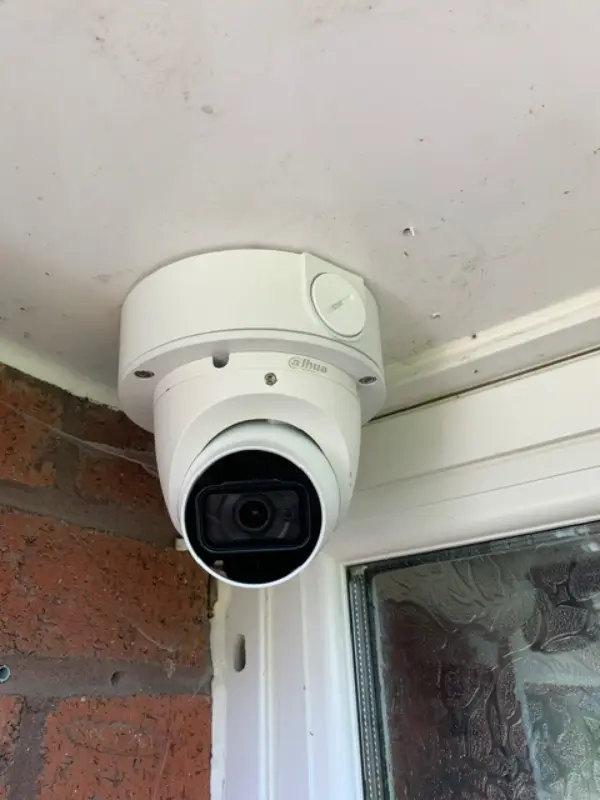
The Physics of IR Backscatter
When a camera's infrared LEDs illuminate, they emit light at approximately 850nm wavelength — invisible to the human eye but clearly visible to the camera sensor. Standard float glass (soda-lime glass) reflects approximately 8-12% of near-infrared light. That 8-12% bouncing straight back into the lens is enough to overwhelm the camera's sensor entirely.
The camera's auto-gain control sees the reflected IR as bright light and adjusts exposure downward, making the outside scene appear completely black. The image looks like a white fog because the sensor is essentially blinded by its own light reflected off the glass surface.
Low-E Glass Makes Everything Worse
Modern UK homes increasingly use Low-E (low emissivity) coated glass for energy efficiency. These coatings are designed to reflect infrared heat back into the room. They are extremely effective at this — which is precisely why they are catastrophic for IR night vision through windows.
Low-E coatings can reflect 25-35% of near-infrared light, compared to 8-12% for standard glass. Many homeowners who install cameras behind Low-E windows report that night vision is completely unusable. The camera cannot see anything beyond the glass at night, regardless of settings adjustments.
The Only Three Fixes That Work
Fix 1: Disable built-in IR and use external illumination. Turn off the camera's internal IR LEDs entirely. Mount an external IR illuminator outside, pointing at the area you want to monitor. The camera then receives clean IR light from outside, with no backscatter from the window.
Fix 2: Press the lens flat against the glass. If you physically press the camera lens against the window pane, you eliminate the air gap that allows IR to reflect. This works surprisingly well but prevents you from angling the camera.
Fix 3: Use a camera without IR. Some cameras offer true starlight or colour night vision sensors that produce usable images in very low light without any IR illumination. These work through glass because there is no IR to reflect.

Why Motion Detection Also Fails Behind Glass
PIR (Passive Infrared) motion sensors detect changes in heat radiation. Glass blocks thermal infrared wavelengths (8,000-14,000nm). A camera behind glass cannot detect body heat through the window pane. If your camera uses PIR for motion alerts, it will never trigger through glass — a person could walk directly past the window and the camera would register nothing.
Pixel-based motion detection (analysing changes in the video image) does work through glass, but only if the night vision image is usable. Fix the IR reflection problem first, then check which motion detection method your camera uses.
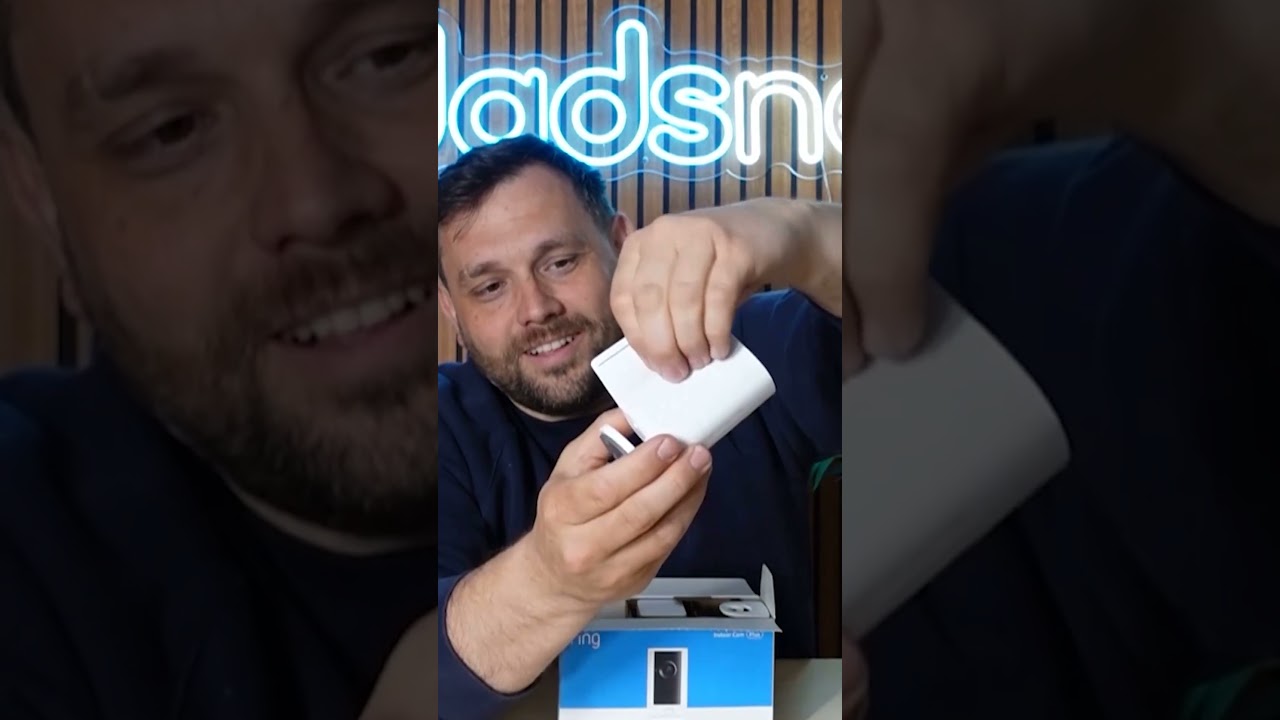
Video: Unboxing the new Ring Indoor Camera Plus - Installation Review 2026 — a practical walkthrough of the technology discussed in this guide.
Frequently Asked Questions
1. Can I use a camera without night vision to see through windows?
Answer: Yes. A camera with good low-light performance and no built-in IR can produce usable colour images through glass, provided there is some external lighting. This is the preferred configuration for indoor-to-outdoor window monitoring. For more detail, see How much does Churches and Places of Worship CCTV cost in 2026? UK prices explained. Also read our related guide: The Ground Loop Problem: Why Horizontal Lines Roll Across Your CCTV Image and How to Fix Them Instantly. Browse our security technology hub at Uni Blog Security Hub. Official UK guidance on this topic: BSI.
2. Does double glazing make IR reflection worse than single glazing?
Answer: Yes. Each pane of glass reflects IR independently. Double glazing means two reflective surfaces, effectively doubling the backscatter problem. The air gap between panes also introduces additional refraction. For more detail, see How to maintain Pubs, Bars and Restaurants CCTV systems - UK guide 2026. Also read our related guide: Why Your AI Security Camera Flags a Washing Line as a Person: The Training Data Blind Spot.
3. Will an anti-reflective coating on the window fix the problem?
Answer: Specialised AR coatings designed for near-infrared transmittance can reduce reflection from 12% to under 2%. Commercially available window AR coatings are expensive and typically designed for photographic studios, not security cameras. For more detail, see Best CCTV cameras for Churches and Places of Worship in 2026 - UK buyer guide. Also read our related guide: The 100-Metre PoE Myth: Why Your Outdoor Camera Fails at 70 Metres and How to Design Realistic Cable Runs.
4. Can I use a 940nm IR camera instead of 850nm to reduce reflection?
Answer: 940nm IR is less visible to humans but reflects similarly off glass. The improvement is marginal. The fundamental problem is reflection at the air-glass interface, which occurs regardless of the specific wavelength. For more detail, see Future of Schools and Education Settings CCTV in 2026 - UK trends and technology. Also read our related guide: Why Your CCTV Camera Attracts Every Moth in the Neighbourhood: The Infrared Insect Magnet Problem.
5. Is it legal to mount a camera inside my home pointing out through a window?
Answer: Yes, provided the camera only records your own property. If it captures a public street or neighbour's property, UK GDPR and the Data Protection Act 2018 apply, regardless of whether the camera is mounted inside or outside. Also read our related guide: Why Your Neighbour's Ring Doorbell Is Legally Filming You: The Fairhurst v Woodard Rule Every UK Homeowner Misses.
Conclusion
The difference between a security system that works and one that frustrates is understanding the real-world behaviour of cameras, cables, and the environment they operate in. Manufacturers sell specifications. Installers solve problems. The questions above represent the issues that UK homeowners and businesses actually face — the ones the spec sheets do not mention.
Article by Gary Pearce, qualified security systems engineer. For a free security assessment, visit gary-pearce-home-services.pages.dev. This guide was last updated June 2026. Verify current UK regulations with the ICO.