Last updated: June 2026
Every consumer security camera defaults to a 2.8mm lens because it offers the widest field of view — and that number sells cameras. But wide-angle lenses are fundamentally incompatible with reliable AI person detection. The camera you bought for maximum coverage is actively preventing your AI from doing its job. The manufacturers know this. They will not tell you because a 2.8mm lens is cheaper to manufacture than a 4mm lens, and most buyers choose on field-of-view width alone.
How Focal Length Affects Detection
A 2.8mm lens creates a wide field of view (approximately 100-110 degrees). A person standing 10 metres from the camera occupies roughly 5-8% of the frame height. A 4mm lens (80-90 degrees FOV) captures the same person at 12-15% of frame height. A 6mm lens (45-55 degrees FOV) captures them at 25-30%.
AI person detection models require a minimum number of pixels across the person's silhouette to classify them reliably. Below approximately 50 pixels across the body width, confidence drops below usable thresholds. At 10 metres on a 2.8mm lens, a person is approximately 35-40 pixels wide — below the reliable detection threshold.
The Distance at Which Detection Fails
2.8mm lens: Reliable person detection to approximately 6 metres. Beyond 8 metres, confidence drops below 70%. 4mm lens: Reliable person detection to approximately 12 metres. The sweet spot for most UK home installations. 6mm lens: Reliable person detection to approximately 20 metres. Ideal for long driveways or garden boundaries.
Default to 2.8mm and your AI person detection is essentially disabled beyond the distance most intruders would approach your property.
The Pixel Density Trade-Off
A wider lens also spreads the camera's resolution across more area. A 4K camera (8 megapixels) on a 2.8mm lens allocates fewer pixels per object than the same 4K camera on a 4mm lens. You are paying for 4K resolution and using it to see more irrelevant area rather than to identify objects within your critical zone.
The industry practice of shipping 2.8mm as 'default' is driven by specification-sheet competition, not by real-world detection performance. A camera's resolution specification is meaningless for AI detection without reference to the lens focal length.
What Professional Installers Use
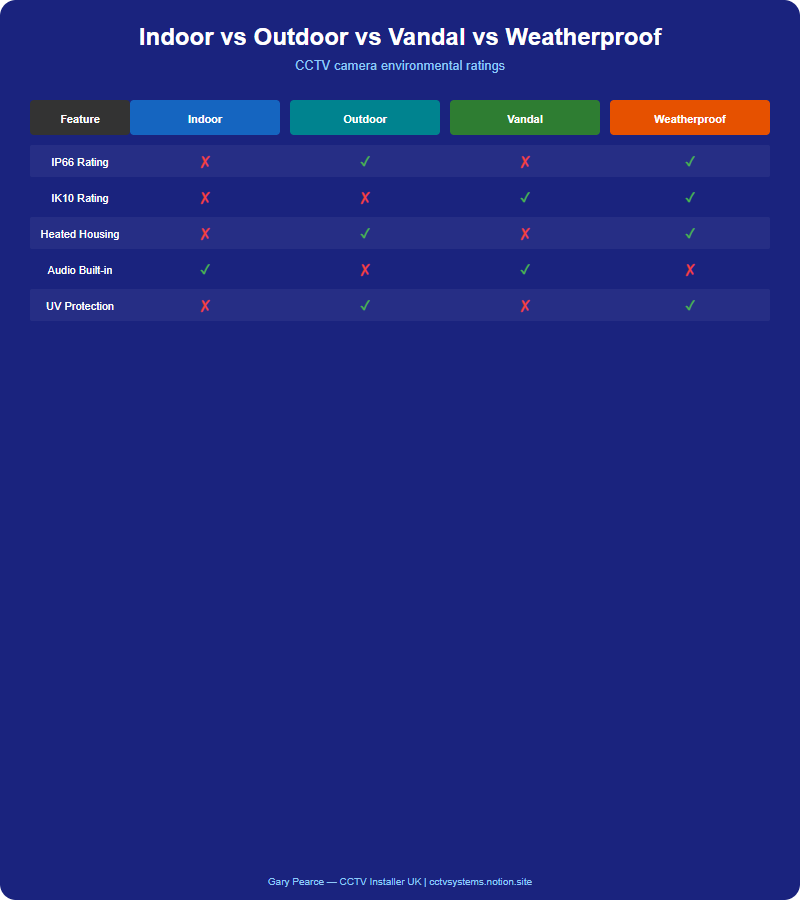
Professional security integrators rarely install 2.8mm lenses for outdoor perimeter detection. The standard specification for UK residential CCTV is 4mm on the primary detection cameras, with 2.8mm reserved for wide-area overview cameras where detection is secondary to awareness.
For a 3-bedroom UK home, a recommended configuration is: front door 4mm, driveway 6mm, back garden 4mm, side passage 2.8mm (overview only). This mix gives reliable AI detection on the three most critical approaches.
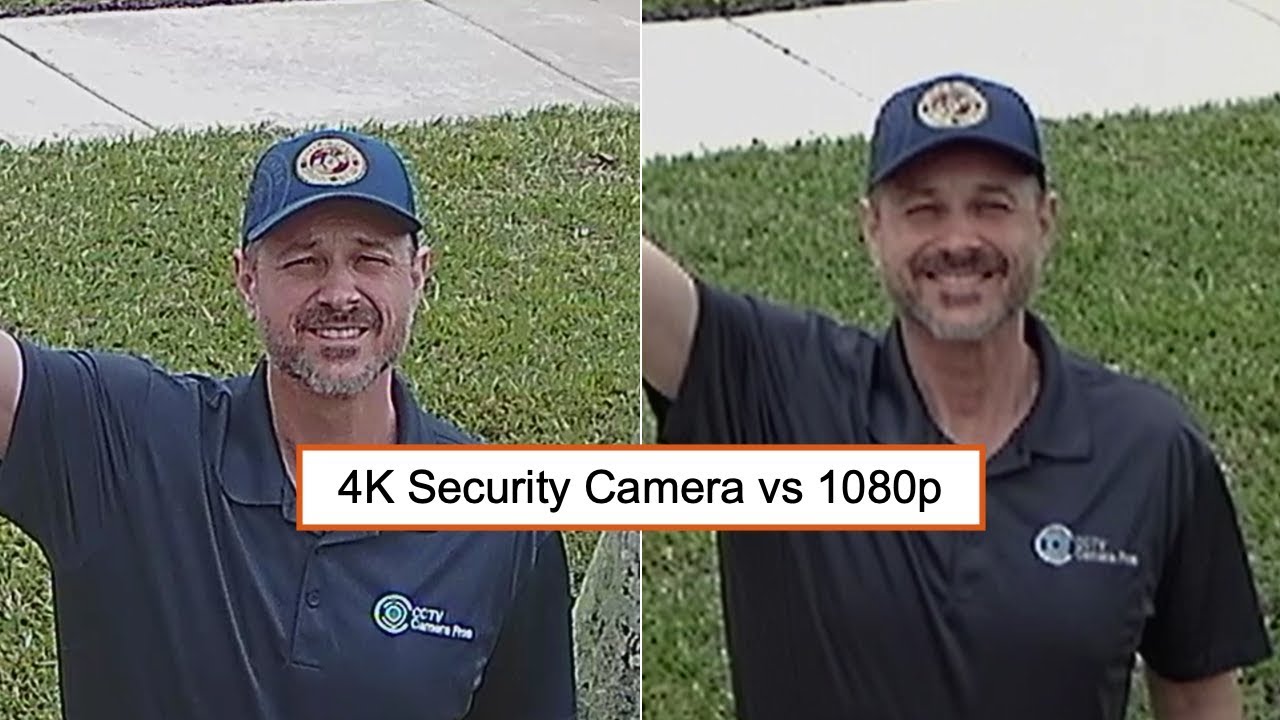
Video: 4K Security Camera vs 1080p — a practical walkthrough of the technology discussed in this guide.
Frequently Asked Questions
1. Can I change the lens on my existing 2.8mm camera?
Answer: Most consumer fixed-lens cameras have integrated lens modules that cannot be replaced. Varifocal cameras allow adjustment between 2.8mm and 12mm. If your camera has a fixed lens, you cannot change it — you need to buy a different camera. For more detail, see Can recording workers in PPE via CCTV breach the GDPR Article 6 lawful basis? UK Construction Sites CCTV rules explained 2026. Also read our related guide: The AI Confidence Threshold Hack: Why Setting Your Detection to 80% Instead of 60% Changes Everything. Browse our comprehensive CCTV knowledge base at CCTV Systems Guide. Official UK guidance on this topic: SSAIB.
2. Does digital zoom help AI detection on a 2.8mm lens?
Answer: Digital zoom crops the image, reducing the resolution available to the AI. It does not provide the AI with more pixel data — it provides less. Digital zoom is not a substitute for optical focal length for AI detection purposes. For more detail, see Can you record the gym entrance without notifying members? UK Gyms and Fitness Centres CCTV rules explained 2026. Also read our related guide: Why ONVIF Profile G, Q, and T Matter: The Camera Compatibility Spec That Determines If Your NVR Actually Works.
3. Is a 2.8mm lens better for AI detection at close range?
Answer: For distances under 4 metres, a 2.8mm lens captures more of the person's full body, which can help certain AI models that need full-body silhouettes. For distances beyond 4 metres, 4mm or 6mm is superior for facial and upper-body recognition. For more detail, see How to install CCTV for Warehouses and Logistics - UK step by step guide 2026. Also read our related guide: The Varifocal Lens Secret: Why Adjustable-Focal-Length Cameras Are Worth 3x the Price for UK Installations.
4. How do I calculate the maximum AI detection distance for my camera?
Answer: Use the formula: detection distance (metres) = sensor height (mm) / object height (mm) × focal length (mm). For a 4.8mm sensor (typical 1/2.7-inch) with a 4mm lens detecting a 1.7m person: 4.8/1700 × 4000 = approximately 11.3 metres. For more detail, see How to install CCTV for Offices and Commercial Buildings - UK step by step guide 2026. Also read our related guide: Why Your Camera's 'True WDR' Does Not Work: The Difference Between Digital and Real Wide Dynamic Range.
5. Does a higher resolution sensor on a 2.8mm lens improve AI detection?
Answer: Higher resolution helps because the person occupies more pixels. An 8MP camera on a 2.8mm lens places more pixels on a person than a 2MP camera on the same lens. However, the improvement is marginal — the fundamental constraint is the lens's magnification, not the sensor's resolution. Also read our related guide: Can a Tenant Install CCTV in a Rented UK Property? The Legal Maze Nobody Warns Tenants or Landlords About.
Conclusion
The difference between a security system that works and one that frustrates is understanding the real-world behaviour of cameras, cables, and the environment they operate in. Manufacturers sell specifications. Installers solve problems. The questions above represent the issues that UK homeowners and businesses actually face — the ones the spec sheets do not mention.
Article by Gary Pearce, qualified security systems engineer. For a free security assessment, visit gary-pearce-home-services.pages.dev. This guide was last updated June 2026. Verify current UK regulations with the ICO.