Last updated: June 2026
A varifocal camera costs two to three times more than a fixed-lens camera with the same sensor and resolution. Most buyers skip this option because they do not understand what the extra money buys. The truth: a varifocal lens transforms a camera from a 'well, it sees roughly that area' device into a precision instrument that maximises pixel density exactly where you need it. For the price of one extra camera, varifocal lenses eliminate the need for two extra cameras.
Why Fixed Lenses Force Compromises
A fixed 2.8mm lens sees a 100-degree field. It captures your front door, your driveway, the neighbour's hedge, the street beyond, the sky above, and a lot of pavement that nobody will ever walk on. Most of its pixels are wasted on irrelevant area. Any intruder appearing at the far end of your driveway occupies just 3% of the frame — not enough for identification.
A fixed 6mm lens sees a 45-degree field. It frames your front door perfectly but misses the delivery driver approaching from the side. It sees who is at the door but not who is walking up the path.
Neither lens is optimal. A varifocal lens allows you to set the exact focal length that frames your specific scene perfectly.
The 6mm-on-Click Calculation
Consider a typical UK semi-detached house with a 6-metre front garden. A 2.8mm lens frames 10 metres of width — capturing next door's house and the pavement. Only 40% of the pixels are useful. A 4mm lens frames 7 metres — better, but still including neighbour's hedge. A 6mm lens frames 3 metres — sees just the front door and steps, but misses the approach.
The varifocal set to 4.5mm frames exactly 5 metres: door, path, gate. Every pixel counts. The AI person detection sees the approaching person at 12-15% of frame height — within the reliable detection zone.
The Installation Superpower
Varifocal lenses allow on-site adjustment. You mount the camera, connect a test monitor, and adjust the focal length while watching the live feed. You can see exactly what the camera captures and tune it to frame the scene optimally. This eliminates the 'install and hope' approach of fixed-lens cameras.
For installers, varifocal lenses reduce callbacks. A customer who complains that the camera does not show enough, or shows too much irrelevant area, can be satisfied by adjusting the zoom rather than replacing the camera.
The Long-Term Value
A fixed-lens camera that frames the scene poorly is permanently compromised. You cannot change the lens. You cannot add more zoom. The only fix is to move the camera or replace it. Varifocal cameras adapt to changes — if the neighbour builds an extension that blocks part of your view, you can adjust the zoom to reframe.
The cost difference is typically GBP 30-50 per camera. Over a 5-year lifespan, that is GBP 6-10 per year for the ability to precisely frame every scene. For a 4-camera home system, the GBP 160-200 premium is repaid in the first year by eliminating the need to buy, install, and cable a fifth camera.
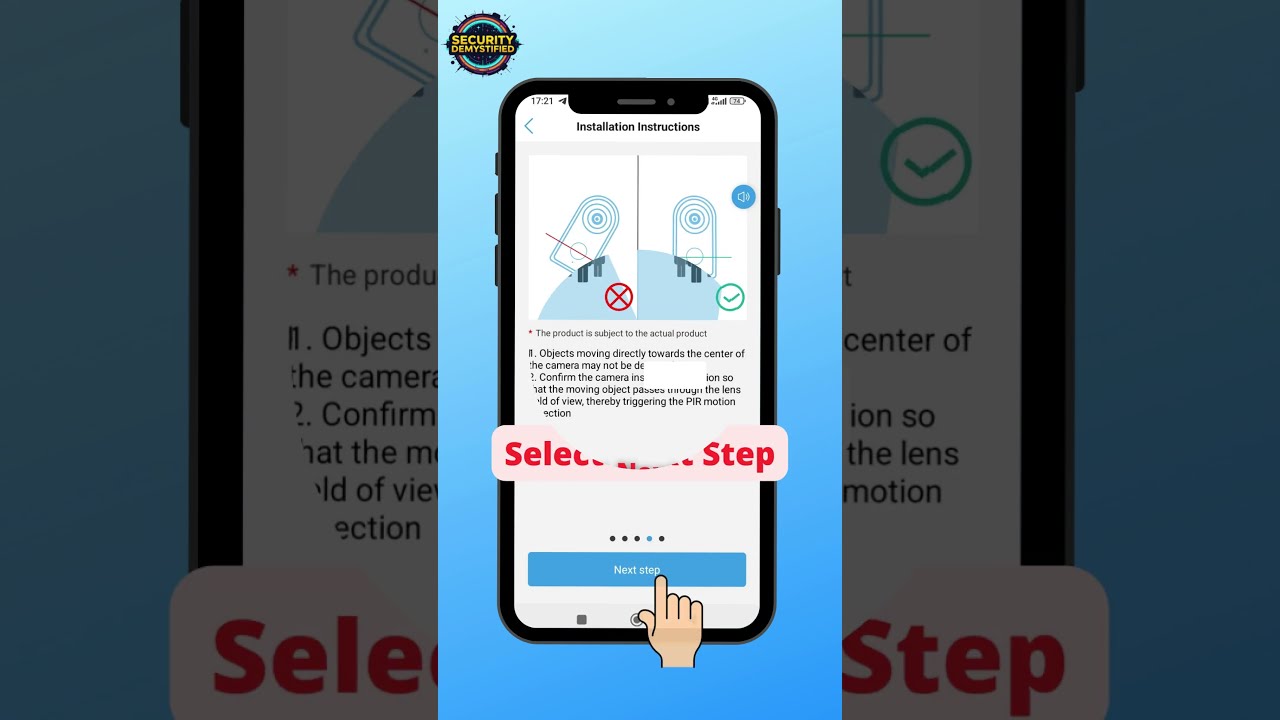
Video: How to Setup SOLAR WiFi Camera with CamHi Pro App | Step-by-Step Guide — a practical walkthrough of the technology discussed in this guide.
Frequently Asked Questions
1. Is there any disadvantage to varifocal over fixed lens?
Answer: Varifocal lenses have more glass elements, which can reduce light transmission by 5-10% compared to a good fixed lens. This means slightly poorer low-light performance. The reduction is typically not noticeable in well-lit scenes but may be visible in extreme low-light conditions. For more detail, see Does Dental and Medical Practices CCTV reduce insurance premiums in 2026? UK guide. Also read our related guide: Why Your Camera's 'True WDR' Does Not Work: The Difference Between Digital and Real Wide Dynamic Range. Browse our comprehensive CCTV knowledge base at CCTV Systems Guide. Official UK guidance on this topic: GOV.UK.
2. What varifocal range is most useful for UK homes?
Answer: The 2.8-12mm range covers everything from wide overview (2.8mm) to narrow telephoto (12mm). This range suits most UK residential and small commercial installations. For longer distances (driveways over 15 metres), a 5-50mm varifocal is more appropriate. For more detail, see Future of Farms and Agricultural Property CCTV in 2026 - UK trends and technology. Also read our related guide: Can a Tenant Install CCTV in a Rented UK Property? The Legal Maze Nobody Warns Tenants or Landlords About.
3. Do all varifocal cameras support remote zoom adjustment?
Answer: No. Many varifocal cameras require manual adjustment at the camera body. Motorised varifocal (zoom) cameras allow remote adjustment through the NVR or software interface. Motorised zoom adds significant cost but is useful for inaccessible mounting positions. For more detail, see How much does Warehouses and Logistics CCTV cost in 2026? UK prices explained. Also read our related guide: What Happens When You Ignore a Subject Access Request for Your CCTV Footage: The GBP 9,000 Legal Risk Nobody Takes Seriously.
4. Does varifocal affect AI person detection accuracy?
Answer: Yes, positively. A properly adjusted varifocal lens places more pixels on the detection zone, which improves AI classification confidence. A varifocal camera adjusted to 6mm at a 12-metre distance produces significantly better AI detection than a 2.8mm fixed lens at the same distance. For more detail, see Retail Shops and Stores CCTV - UK legal requirements and GDPR compliance 2026. Also read our related guide: The Data (Use and Access) Act 2025: What UK Home CCTV Owners Must Know About the New Law That Changed Everything.
5. Can I retrofit a varifocal lens to an existing fixed-lens camera?
Answer: No. The lens module is integrated into the camera assembly. Fixed-lens cameras cannot be upgraded to varifocal. The camera must be replaced with a varifocal model. Also read our related guide: Listed Building Consent vs CCTV: The Conflicting Regulations That Trap UK Homeowners in a Legal Catch-22.
Conclusion
The difference between a security system that works and one that frustrates is understanding the real-world behaviour of cameras, cables, and the environment they operate in. Manufacturers sell specifications. Installers solve problems. The questions above represent the issues that UK homeowners and businesses actually face — the ones the spec sheets do not mention.
Article by Gary Pearce, qualified security systems engineer. For a free security assessment, visit gary-pearce-home-services.pages.dev. This guide was last updated June 2026. Verify current UK regulations with the ICO.