Last updated: June 2026
Every rural CCTV installer knows the truth the industry hides: spiders are the single biggest threat to night vision performance in the British countryside. Manufacturers sell you 4K resolution, AI analytics, and starlight sensors, but none of them mention that a single spider web can render every one of those features completely useless. This is not an edge case. In rural UK deployments, spider interference is the norm, not the exception.
Why Spiders Love CCTV Cameras
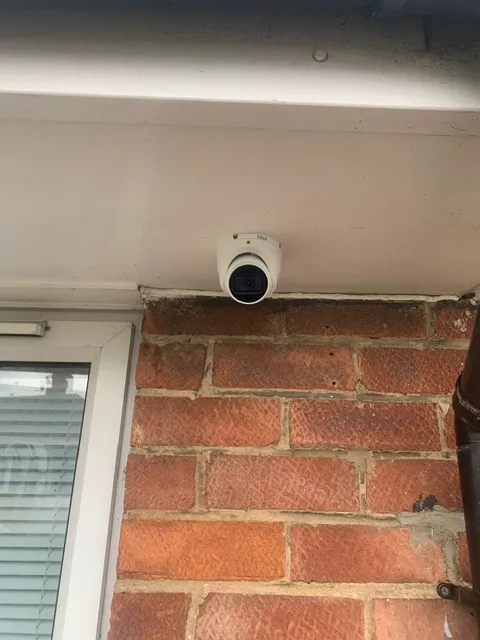
A CCTV camera is a spider's ideal habitat. The housing provides shelter from rain and wind. The camera emits warmth from its electronics, creating a microclimate that stays several degrees above ambient temperature on cold nights. The infrared LEDs attract flying insects — which means a constant food supply arrives at the spider's front door every evening.
To a spider, your expensive 4K CCTV camera is a heated, all-you-can-eat restaurant with a prime view. The spider builds its web directly across the lens because that is where the insects cluster. The infrared light reflects off the silk strands, creating a glowing, blurred obstruction that no amount of software enhancement can fix.
Why Digital Noise Reduction Makes It Worse
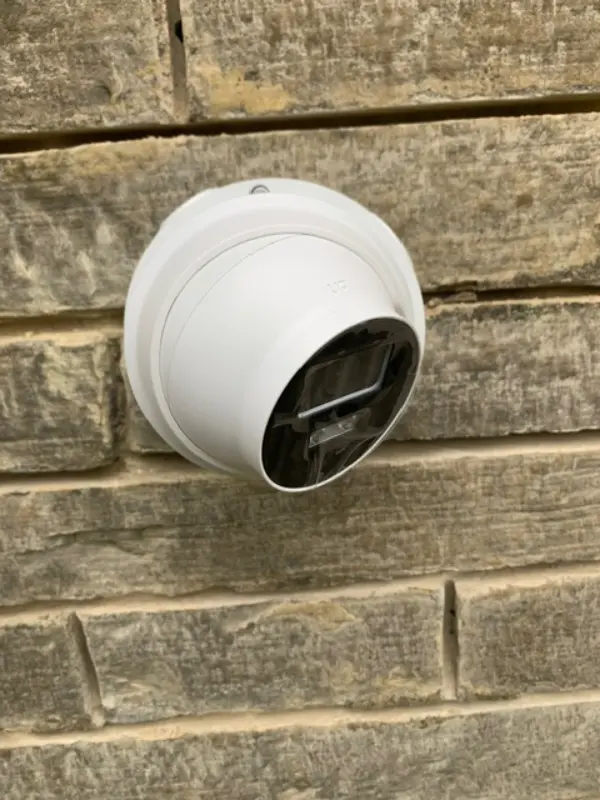
Here is the irony: Digital Noise Reduction (DNR) is designed to clean up grainy low-light images. When a spider web is present, the DNR algorithm interprets the glowing web as image noise and attempts to remove it. But a spider web is not random noise — it is a structured pattern. The DNR creates ghosting artifacts around the web strands, making the image look worse than if DNR were turned off.
AI-based person detection also fails catastrophically. A spider walking across the lens at night appears as a large, close-range moving object. The AI cannot determine scale at that proximity, so it classifies the spider as a person-sized intruder. Your phone buzzes all night with false alerts of a trespasser that is actually an arachnid 8mm from the lens.
What Actually Works (And What Doesn't)
Spider repellent sprays work for approximately 3-7 days in UK conditions before rain washes them off. Ultrasonic pest repellers have no measurable effect on spiders. Teflon-based lens coatings make it harder for webs to stick but do not prevent spiders from building them.
The only reliable solution is physical: fit a weatherproof housing with a glass shield positioned at least 5cm from the lens. Spiders cannot build webs in the gap between the shield and the lens because there is no solid anchor point. For existing cameras, a weekly inspection schedule during spider season (August to October in the UK) is the only dependable approach.
The Seasonal Calendar
UK spider activity follows a predictable pattern. August-October: peak spider season. Web buildup accelerates dramatically. November-February: reduced activity as spiders seek shelter. March-May: new spiderlings emerge and establish territories. June-July: moderate activity with increased insect prey.
Plan your maintenance schedule around these peaks. A camera that needs monthly cleaning in spring needs weekly cleaning in September. Failure to adjust your maintenance frequency is the primary reason rural CCTV systems degrade to unusable during autumn.

Video: ALEXA ACTIONABLE NOTIFICATIONS (Home Assistant + Alexa Skill) — a practical walkthrough of the technology discussed in this guide.
Frequently Asked Questions
1. Will a higher-resolution camera see through spider webs better?
Answer: No. Higher resolution means the web occupies more pixels, not fewer. A 4K camera shows a spider web in detailed, crisp, useless glory. Resolution does not help you see past an obstruction — it helps you see the obstruction more clearly. For more detail, see How to maintain Self Storage Facilities CCTV systems - UK guide 2026. Also read our related guide: Why CCTV Behind Glass Fails at Night: The Physics of IR Reflection Through UK Windows. Browse our in-depth home security resource at Home Security Guide. Official UK guidance on this topic: ICO.
2. Do dome cameras have fewer spider problems than bullet cameras?
Answer: Dome cameras are marginally better because the curved surface gives spiders fewer flat anchor points for webs. However, the dome itself accumulates dust and condensation that creates similar image degradation. No camera form factor is spider-proof. For more detail, see Does Pubs, Bars and Restaurants CCTV reduce insurance premiums in 2026? UK guide. Also read our related guide: The Ground Loop Problem: Why Horizontal Lines Roll Across Your CCTV Image and How to Fix Them Instantly.
3. Can I use insect-repellent coatings on the camera housing?
Answer: Silicone-based repellents can reduce web adhesion for 2-3 weeks. PTFE-based coatings last longer but cost more. Neither is a substitute for physical cleaning. Always test any coating on a small area first — some formulations cause plastic housings to craze. For more detail, see Future of Construction Sites CCTV in 2026 - UK trends and technology. Also read our related guide: Why Your AI Security Camera Flags a Washing Line as a Person: The Training Data Blind Spot.
4. Does turning off IR LEDs reduce spider attraction?
Answer: Partially. IR-illuminated cameras attract more flying insects, which attract more spiders. A camera with external IR illumination mounted away from the housing draws the insect activity away from the lens. This is the single most effective engineering fix for spider problems. For more detail, see How to maintain Offices and Commercial Buildings CCTV systems - UK guide 2026. Also read our related guide: The 100-Metre PoE Myth: Why Your Outdoor Camera Fails at 70 Metres and How to Design Realistic Cable Runs.
5. Why does my camera look fine at dusk but terrible at midnight?
Answer: Spiders are nocturnal and typically emerge to build or repair webs after darkness falls. Your camera may be web-free at 8 PM and completely obscured by 2 AM. Always check night vision footage at different times throughout the night, not just at sunset. Also read our related guide: Why Your CCTV Camera Attracts Every Moth in the Neighbourhood: The Infrared Insect Magnet Problem.
Conclusion
The difference between a security system that works and one that frustrates is understanding the real-world behaviour of cameras, cables, and the environment they operate in. Manufacturers sell specifications. Installers solve problems. The questions above represent the issues that UK homeowners and businesses actually face — the ones the spec sheets do not mention.
Article by Gary Pearce, qualified security systems engineer. For a free security assessment, visit gary-pearce-home-services.pages.dev. This guide was last updated June 2026. Verify current UK regulations with the ICO.