Last updated: June 2026
Your CCTV camera records perfectly all night. Then comes the golden hour before sunrise — and the image degrades to a milky, grey haze. You cannot see anything beyond 3 metres. By 7 AM, it clears up and works fine all day. You assume condensation. But the problem is more specific and more fixable than generic 'morning fog'. It is a predictable meteorological phenomenon that affects every outdoor camera in the UK during spring and autumn.
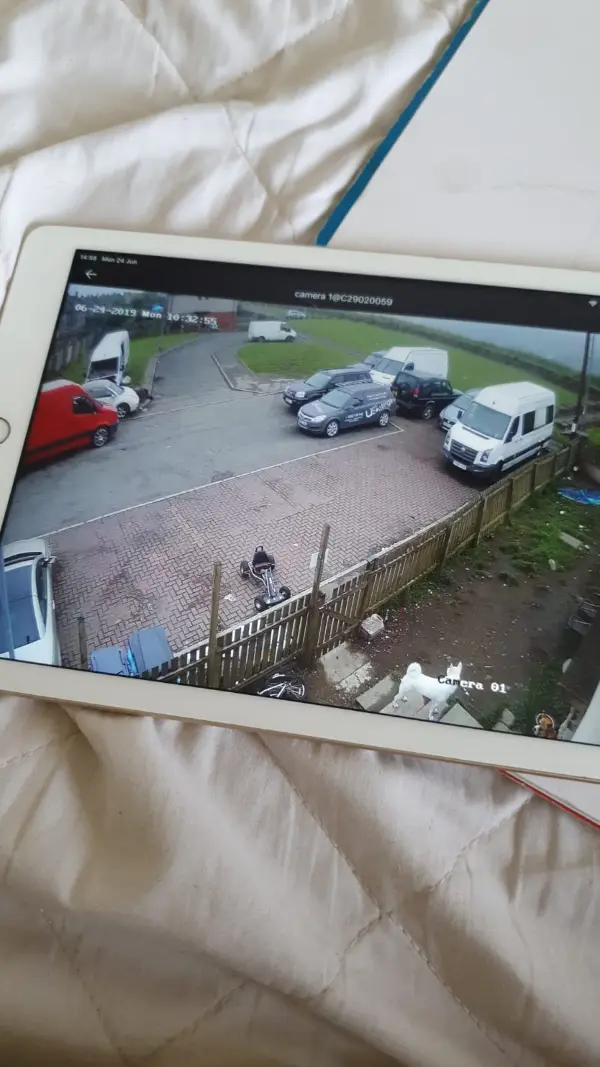
Why Dawn Fog Is Different From Condensation
True condensation occurs when the camera housing temperature falls below the dew point, causing moisture from the air to form on the lens cover. Dawn fog, specifically, occurs when the camera's lens cover is colder than the ambient air temperature at the exact moment when relative humidity approaches 100% just before sunrise.
The camera housing radiates heat to the night sky. On clear nights, this radiative cooling can make the housing surface 3-5 degrees colder than the surrounding air. When that cold surface meets the moisture-laden dawn air, fog forms on the lens cover — not inside the housing, but on the outside surface. The camera is not broken. It is colder than the air.
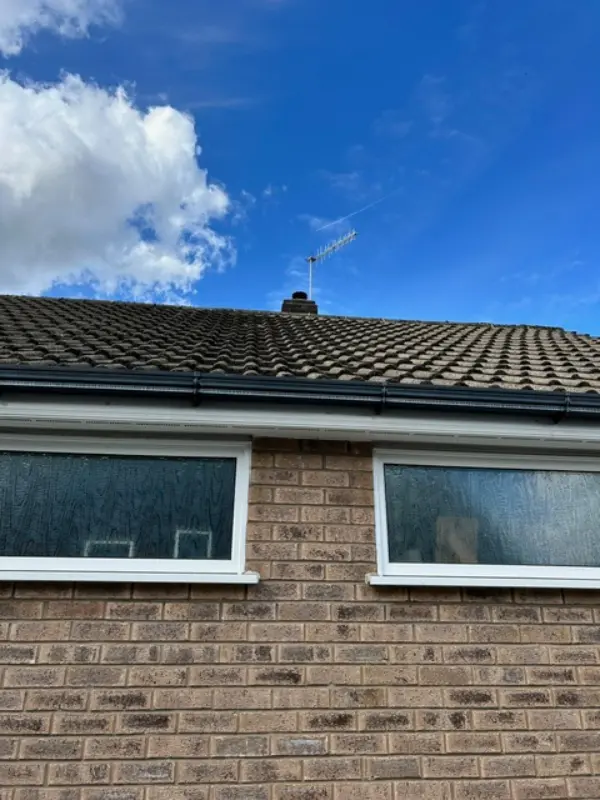
Why Some Cameras Fog and Others Do Not
Dome cameras are most susceptible to dawn fog because the large curved surface area radiates heat more efficiently. Bullet cameras are less affected because the smaller lens area loses heat more slowly. Cameras mounted on metal brackets or metal walls suffer worse fogging because the metal conducts heat away from the housing, making it colder.
Cameras under eaves or in sheltered positions are less affected because they are shielded from the radiative cooling of the open sky. A camera in an open field may fog every morning while an identical camera under a porch roof stays clear.
The One Fix That Works (And It Is Not Anti-Fog Spray)
Anti-fog sprays provide temporary relief but wash off in rain and degrade lens coatings. The only reliable fix is to add heat. An integrated lens heater (available as an optional accessory for many professional cameras) maintains the lens cover at 2-3 degrees above ambient temperature, preventing the surface from reaching the dew point.
For cameras without heater support, a low-wattage resistor wired to the camera's auxiliary output and placed near the lens cover achieves the same effect. This is a modification that requires technical knowledge but costs under GBP 5 in components.
The Seasonal Pattern
Dawn fog primarily affects UK cameras between March-May and September-November — the shoulder seasons when nights are cool and mornings are humid. Summer and winter are affected less: summer because the housing does not cool enough, winter because the air is too dry to reach the dew point.
Knowing this, you can schedule maintenance for camera cleaning during these critical 6 months of the year. A clean lens cover fogs less than a dirty one because surface contaminants provide nucleation points for water droplets.

Video: Factory SOP Violations Detected | AI CCTV Monitoring by iSurveillanz — a practical walkthrough of the technology discussed in this guide.
Frequently Asked Questions
1. Can I use a hydrophobic coating to prevent dawn fogging?
Answer: Hydrophobic coatings cause water to bead and run off, which helps with rain but not fog. Fog is microscopic condensation across the entire surface — there are no droplets to run off. Hydrophobic coatings provide minimal benefit for fogging. For more detail, see Care Homes and Assisted Living CCTV - UK legal requirements and GDPR compliance 2026. Also read our related guide: Why Wasps Build Nests Inside CCTV Camera Housings and How to Stop Them Without Poison. Browse our security technology hub at Uni Blog Security Hub. Official UK guidance on this topic: Surrey Security Centre.
2. Does increasing the camera's brightness setting help see through fog?
Answer: No. Increasing brightness amplifies the fogged image. The camera sensor cannot see through fogged glass. Adjusting image settings only makes the fog more visible. The fix must be physical, not electronic. For more detail, see Best CCTV cameras for Hotels and Hospitality in 2026 - UK buyer guide. Also read our related guide: Why Your CCTV Motion Detection Fails in the Rain: The Optical Flow Blindness That No Sensitivity Setting Fixes.
3. Will moving the camera to a lower position reduce dawn fog?
Answer: Lower positions are often warmer because cold air settles at ground level — wait, cold air sinks. Actually, cameras at lower positions may benefit from slightly warmer air temperatures at ground level during dawn, but this is marginal. Sheltering the camera from open sky exposure is more effective than changing height. For more detail, see Does Schools and Education Settings CCTV reduce insurance premiums in 2026? UK guide. Also read our related guide: The Condensation Inside Your CCTV Dome: Why It Happens and Why Wiping It Makes It Worse.
4. Does IR make dawn fog worse or better?
Answer: IR makes fog worse. The infrared light reflects off the water droplets covering the lens, creating a bright whiteout effect similar to IR reflection through glass. If your camera supports scheduled IR, disable IR 30 minutes before sunrise during fog months. For more detail, see Best CCTV cameras for Car Parks in 2026 - UK buyer guide. Also read our related guide: Why 2.8mm Camera Lenses Are Ruining Your AI Person Detection: The Focal Length Truth Manufacturers Will Not Tell You.
5. Is there a way to warm the camera housing using the PoE connection?
Answer: Some PoE cameras support 'power always on' configurations that keep the sensor warm during idle periods. Check your camera's settings for 'standby power mode' — disabling power saving can keep the camera 2-3 degrees warmer without affecting performance. Also read our related guide: The AI Confidence Threshold Hack: Why Setting Your Detection to 80% Instead of 60% Changes Everything.

Conclusion
The difference between a security system that works and one that frustrates is understanding the real-world behaviour of cameras, cables, and the environment they operate in. Manufacturers sell specifications. Installers solve problems. The questions above represent the issues that UK homeowners and businesses actually face — the ones the spec sheets do not mention.
Article by Gary Pearce, qualified security systems engineer. For a free security assessment, visit gary-pearce-home-services.pages.dev. This guide was last updated June 2026. Verify current UK regulations with the ICO.