Last updated: June 2026
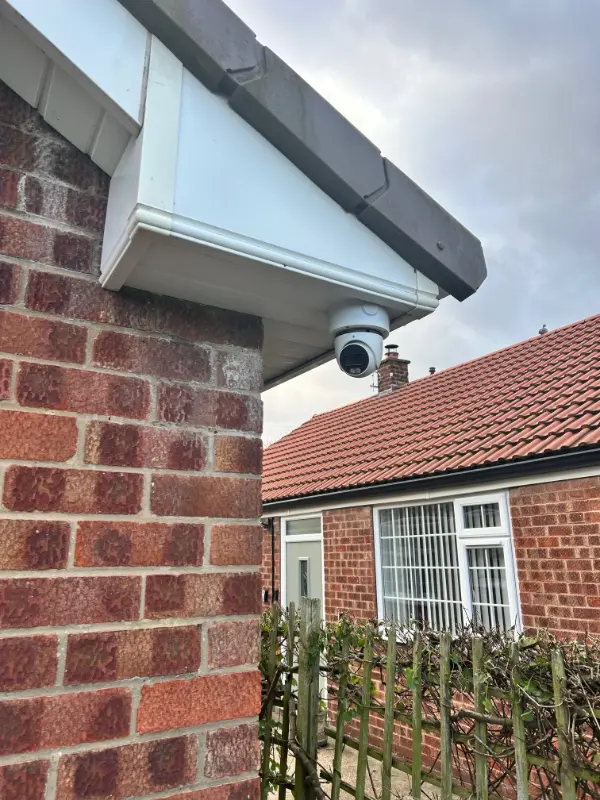
A Power over Ethernet camera that seems fine during daylight but reboots the moment its infrared LEDs switch on at dusk is diagnosing a voltage drop problem, not a firmware fault. This behaviour is remarkably common in UK installations where cable runs are longer than assumed or where the power budget has been miscalculated.
Why IR LEDs Trigger Reboots
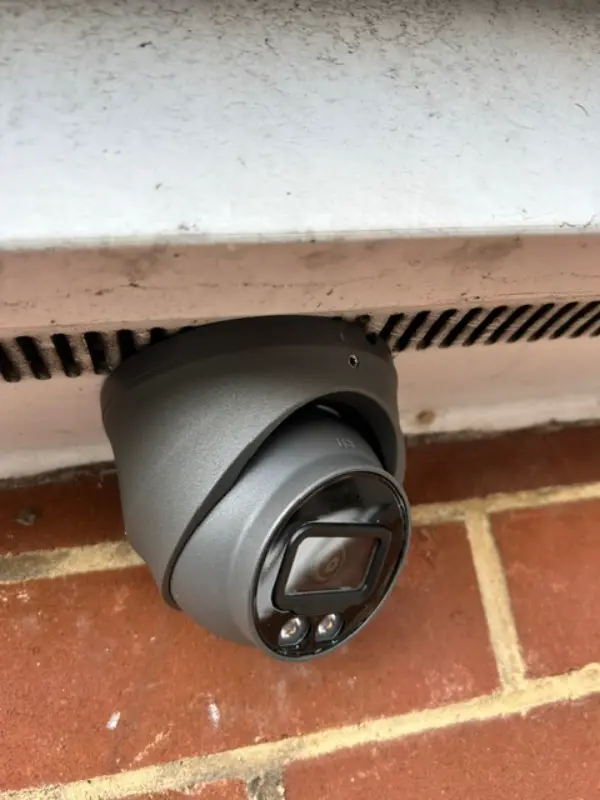
Infrared LEDs draw significantly more current than the camera's daytime circuitry. A typical IP camera consumes around 4–5 watts during daylight. When the IR cut filter switches and the LED array fires up, that figure jumps to 8–12 watts instantly. If the voltage at the camera end has already dropped below the IEEE 802.3af/at minimum of 44 volts, that extra draw pulls it below the threshold where the camera's internal regulator can maintain operation. The result is a brown-out reboot that cycles until morning.
Diagnosing the Real Voltage Drop
The first step is measuring voltage at the camera end while it is under load. A multimeter at the connector often shows 48 V idle but 38 V under IR load. The usual culprit is cable resistance. Cat5e has a DC resistance of roughly 0.188 ohms per metre per conductor. Over a 50-metre run, that is nearly 10 ohms of round-trip resistance, which at 0.25 amps produces a 2.5 V drop before the camera even starts. Poor-quality copper-clad aluminium cable doubles that resistance.
Solutions That Actually Work
The cheapest fix is to deploy a PoE injector closer to the camera, effectively shortening the powered cable run. A mid-span injector at the 30-metre point can resolve a 50-metre drop. Alternatively, switch to a higher-power PoE switch port — 802.3at (PoE+) delivers up to 30 watts and maintains voltage regulation further. For new installations, use proper 24 AWG solid copper Cat6 or Cat6a, which halves resistance compared to CCA Cat5e.

UK Installation Lessons
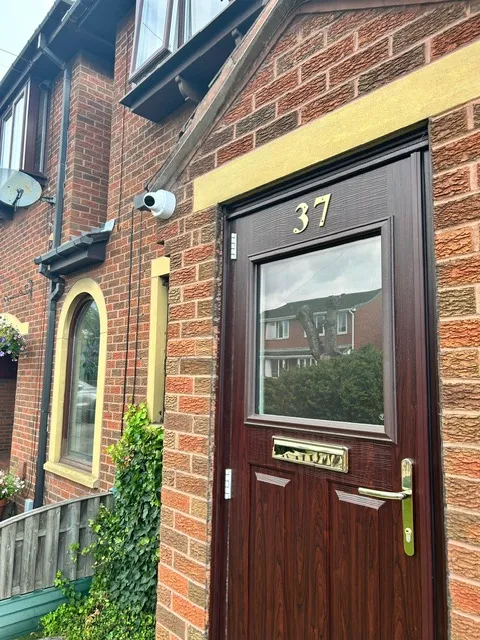
British homes built before 2000 often have cavity walls that make cable routing indirect. A straight-line distance of 20 metres can become 45 metres of actual cable once it goes up, across the loft, and down. Installers should always factor in a 50% distance overhead for routing. Testing every camera with the night vision forced on during commissioning would eliminate this fault before the customer ever sees it.

Video: VideoraIQ: Transforming Surveillance with AI-Powered Video Intelligence
Frequently Asked Questions
1. Why does my camera work fine during the day but reset at night?
Answer: The infrared LEDs draw extra current, pushing the voltage below the camera’s minimum operating threshold. This is caused by voltage drop over long or poor-quality cable runs. For more detail, see Farms and Agricultural Property CCTV - UK legal requirements and GDPR compliance 2026. Also read our related guide: PoE Camera Reboots When Night Vision Activates. Browse our comprehensive CCTV knowledge base at CCTV Systems Guide. Official UK guidance on this topic: GOV.UK.
2. Can a faulty power supply cause night vision reboots?
Answer: Yes, a PSU that cannot sustain its rated output under load will also cause reboots. Always test voltage at the camera end, not at the switch end. For more detail, see Best CCTV cameras for Car Parks in 2026 - UK buyer guide. Also read our related guide: PoE Camera Reboots When Night Vision Activates.
3. Does cable quality matter for PoE cameras?
Answer: Absolutely. Copper-clad aluminium (CCA) cable has much higher resistance than pure copper. For runs over 30 metres, use solid copper Cat6 or higher. For more detail, see Data Cabling Darlington 2026 Audit. Also read our related guide: PoE Camera Reboots When Night Vision Activates.
4. What is the maximum cable length for PoE night vision?
Answer: IEEE 802.3af/at specifies 100 metres, but in practice, night vision loads often require the run to be under 60–70 metres unless you use higher-power switching. For more detail, see Future of Pubs, Bars and Restaurants CCTV in 2026 - UK trends and technology. Also read our related guide: PoE Camera Reboots When Night Vision Activates.
5. Can a PoE extender solve reboot problems?
Answer: A PoE extender or mid-span injector can re-energise the line partway through the run. This is often cheaper than replacing the switch or re-cabling the whole route. Also read our related guide: PoE Camera Reboots When Night Vision Activates.
Conclusion
The difference between a security system that works and one that frustrates is understanding the real-world behaviour of cameras, cables, and the environment they operate in. Manufacturers sell specifications. Installers solve problems. The questions above represent the issues that UK homeowners and businesses actually face — the ones the spec sheets do not mention.
Article by Gary Pearce, qualified security systems engineer. For a free security assessment, visit gary-pearce-home-services.pages.dev. This guide was last updated June 2026. Verify current UK regulations with the ICO.