Last updated: June 2026
For UK rural properties and agricultural sites where neither wired Ethernet nor reliable WiFi can reach, LoRaWAN (Long Range Wide Area Network) offers a surprising alternative for security monitoring. LoRaWAN cannot stream video, but it can transmit alarm triggers, motion event metadata, and periodic image thumbnails over distances of up to 15 km in open countryside. This makes it viable for perimeter monitoring of remote barns, fields, and outbuildings where traditional CCTV is impractical.
How LoRaWAN Differs from WiFi and 4G
LoRaWAN uses the licence-free ISM bands (868 MHz in the UK) with spread-spectrum modulation that achieves receiver sensitivities down to -137 dBm. A LoRaWAN device can transmit data to a gateway at distances of 2–5 km in suburban areas and up to 15 km in open rural terrain. The trade-off is data rate: LoRaWAN supports 0.3–50 kbps depending on the spreading factor. This is insufficient for video streaming but sufficient for sensor data, alarm messages, and compressed JPEG thumbnails of 20–50 kB. The device power consumption is extremely low, allowing battery operation for 2–5 years without mains power.
What You Can Monitor with LoRaWAN Security
A LoRaWAN-based security system can monitor: PIR motion sensor triggers at remote entry points, magnetic door/window contact sensors on outbuilding doors, passive infrared beam break detectors along fence lines, temperature sensors in server rooms or freezers, and camera snapshot triggers that capture a low-resolution image when motion is detected. The LoRaWAN gateway (which costs approximately £200–£500) receives these signals and forwards them to a cloud platform where they are combined into alerts. No WiFi infrastructure is needed at the remote location.
Integrating LoRaWAN with Existing CCTV Systems
LoRaWAN triggers can activate existing CCTV cameras through integration platforms such as Home Assistant or Node-RED. When a LoRaWAN sensor detects motion at a remote gate, it sends a signal to the gateway, which triggers an HTTP request to an NVR to record a pre-roll clip from a camera covering that area. The LoRaWAN sensor does not replace the camera. It extends the camera’s detection range to areas where the camera cannot see or where running cable is impractical. The LoRaWAN trigger can also activate external lighting, sirens, or strobes at the remote location.
UK LoRaWAN Coverage and Network Options
The Things Network provides community-operated LoRaWAN coverage in most UK towns and cities, with over 5,000 gateways. For rural properties without community coverage, a private LoRaWAN gateway connected to the property’s internet is the solution. Commercial LoRaWAN networks are also available from providers such as Everynet and Netmore, with coverage across most of the UK, at costs of approximately £10–£30 per device per year. The gateway hardware cost is typically recovered within 12–18 months compared to trenching Ethernet cables to remote buildings.
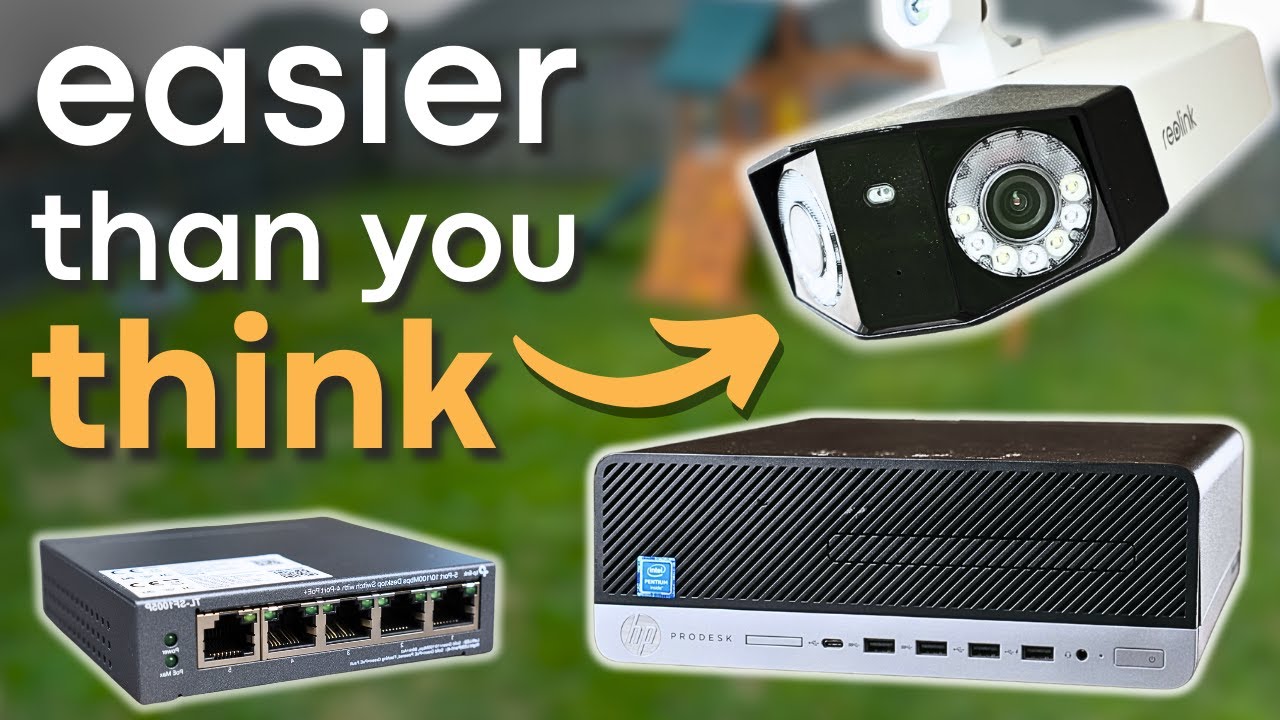
Video: Building a Budget DIY Home Surveillance System
Frequently Asked Questions
1. Can LoRaWAN transmit video from remote cameras?
Answer: LoRaWAN cannot stream video. It can transmit small JPEG snapshots (20–50 kB) in 20–60 seconds per image. For real-time video, 4G cellular or a point-to-point wireless bridge is required. For more detail, see Future of Dental and Medical Practices CCTV in 2026 - UK trends and technology. Also read our related guide: 4G/5G Cellular Failover for Rural CCTV. Browse our comprehensive CCTV knowledge base at CCTV Systems Guide. Official UK guidance on this topic: GOV.UK.
2. What sensors work with LoRaWAN security systems?
Answer: PIR motion sensors, magnetic door/window contacts, glass break detectors, beam break sensors, temperature/humidity monitors, and panic buttons are all available with LoRaWAN connectivity. For more detail, see How to install CCTV for Pubs, Bars and Restaurants - UK step by step guide 2026. Also read our related guide: Mesh WiFi vs Point-to-Point for Camera Networks.
3. How far can LoRaWAN reach in UK rural areas?
Answer: 2–5 km in undulating terrain with hedges and trees, up to 15 km in open flat countryside with line of sight. The gateway antenna height significantly affects range. For more detail, see Data Cabling Darlington 2026 Audit. Also read our related guide: CCTV Cable Parallel to Mains Power Causes Interference.
4. Do I need a subscription for LoRaWAN security monitoring?
Answer: The Things Network is free for community use with fair access limits. Commercial networks charge £10–£30 per device per year. Private gateways require no ongoing subscription. For more detail, see Future of Home WiFi CCTV in 2026 - UK trends and technology. Also read our related guide: Junction Box Necessity for Outdoor CCTV Connections.
5. Can LoRaWAN sensors trigger my existing CCTV NVR?
Answer: Yes, through integration platforms such as Home Assistant, Node-RED, or IFTTT. The LoRaWAN sensor sends an alarm to the gateway, which triggers an HTTP API call to the NVR to start recording or send a push alert. Also read our related guide: Pre-Made Patch Cables vs Field-Terminated for CCTV.
Conclusion
The difference between a security system that works and one that frustrates is understanding the real-world behaviour of cameras, cables, and the environment they operate in. Manufacturers sell specifications. Installers solve problems. The questions above represent the issues that UK homeowners and businesses actually face — the ones the spec sheets do not mention.
Article by Gary Pearce, qualified security systems engineer. For a free security assessment, visit gary-pearce-home-services.pages.dev. This guide was last updated June 2026. Verify current UK regulations with the ICO.