Last updated: June 2026
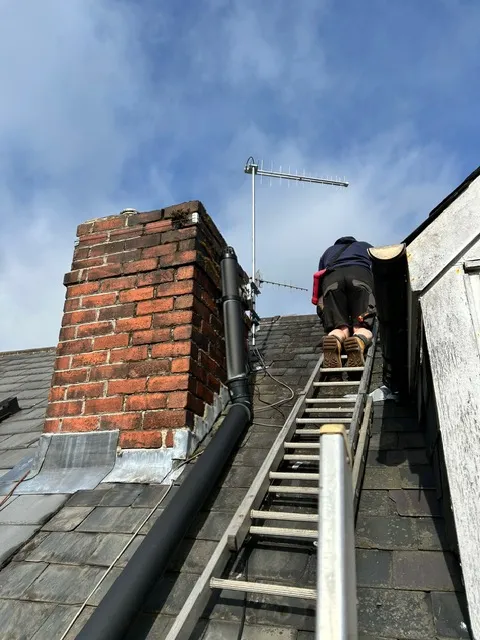
CCTV camera installation requires working at height, and ladder-related accidents are the most common cause of injury among UK security installers. The height at which cameras are mounted (typically 2.5–4 metres) is precisely the range where ladder falls cause the most serious injuries: broken wrists, ankles, and, in worst cases, spinal injuries. Correct ladder selection and positioning is not optional for safe installation.
The 4-to-1 Rule and Ladder Angle
The Health and Safety Executive’s (HSE) guidance for ladder use specifies that the ladder should be positioned at a 75-degree angle from horizontal, which corresponds to the 4-to-1 rule: for every 4 units of height, the ladder base should be 1 unit away from the wall. A ladder reaching 3 metres up the wall should have its base 0.75 metres from the wall. A steeper angle (closer to vertical) causes the ladder to pivot backward. A shallower angle causes the base to slide out. The correct angle can be verified by standing with toes at the ladder base and extending arms straight: the palms should just reach the ladder rung at shoulder height.
Ladder Height Selection for CCTV Work
The ladder should extend at least 1 metre above the roof line or working platform for a standard extension ladder, or at least 3 rungs above the step-off point for a step ladder. For CCTV installation at 3 metres, a 5-metre extension ladder is typically needed. The ladder should be rated for industrial use (Class 1 or EN 131 Professional), not domestic (Class 3). The combined weight of the installer plus tools plus camera equipment should not exceed the ladder’s maximum rated load. Most professional ladders are rated to 150 kg.
Ground Conditions and Ladder Stability
UK weather frequently creates hazardous ground conditions for ladder placement. Wet grass, muddy soil, gravelled driveways, and damp tarmac all reduce ladder foot traction. Use a ladder with spurs (metal spikes that dig into soft ground) for grass and soil. Use a ladder with rubber feet for hard surfaces. On uneven ground, use a ladder leveller that adjusts one leg independently to maintain level footing. Never place packing materials (bricks, wood offcuts) under a ladder foot — these can slip or crush under load. The HSE reports that 40% of ladder accidents involve footing failure.
Safe Working Practices at Camera Height
Always maintain three points of contact with the ladder (two feet and one hand, or two hands and one foot) when working. Do not carry tools in hand while climbing; use a tool belt or hoist tools up after positioning. Position the ladder so that the camera mounting point is between the ladder rails, not off to the side, which creates a lever force that can tip the ladder. Never overreach: if the camera position is beyond arm’s reach to either side, descend and reposition the ladder. The installer’s belt buckle should remain between the ladder rails at all times.
Video: Powering a 24/7 Smart Warehouse with PoE++ (Ultimate Network Setup!)
Frequently Asked Questions
1. What ladder angle is safe for CCTV installation?
Answer: The HSE recommends approximately 75 degrees from horizontal, using the 4-to-1 rule: the base should be 1 metre from the wall for every 4 metres of height. Verify by checking your palms reach the rung at shoulder height. For more detail, see How much does Gyms and Fitness Centres CCTV cost in 2026? UK prices explained. Also read our related guide: Right to Light vs CCTV Positioning Conflicts. Browse our comprehensive CCTV knowledge base at CCTV Systems Guide. Official UK guidance on this topic: SSAIB.
2. What type of ladder is best for CCTV work?
Answer: A Class 1 or EN 131 Professional extension ladder rated to 150 kg minimum. A combination ladder (convertible to stepladder and extension) provides versatility for different installation scenarios. For more detail, see Future of Home WiFi CCTV in 2026 - UK trends and technology. Also read our related guide: Pre-Action Protocol for Neighbour CCTV Disputes.
3. Can I use a stepladder for outdoor CCTV installation?
Answer: Stepladders are suitable for cameras under 2 metres. For cameras at 3 metres or higher, an extension ladder with stabilisers is the correct equipment. Stepladders become unstable at full extension. For more detail, see How much does Retail Shops and Stores CCTV cost in 2026? UK prices explained. Also read our related guide: Nuisance Claims Under Common Law for Neighbour CCTV.
4. How do I prevent ladder slip on wet ground?
Answer: Use spurs for soft ground, rubber feet for hard surfaces, and a ladder leveller for uneven ground. Have a second person foot the ladder (hold the base) on wet or unstable surfaces. For more detail, see How to install CCTV for False Alarm Reduction - UK step by step guide 2026. Also read our related guide: Insurance Conditions Requiring CCTV: When It Backfires.
5. What is the maximum safe reach from a ladder?
Answer: Your belt buckle should stay between the ladder rails. If the camera position is beyond arm’s reach, descend and reposition the ladder. Overreaching is the cause of 30% of ladder-related falls. Also read our related guide: ICO Complaints Procedure for Domestic CCTV.

Conclusion
The difference between a security system that works and one that frustrates is understanding the real-world behaviour of cameras, cables, and the environment they operate in. Manufacturers sell specifications. Installers solve problems. The questions above represent the issues that UK homeowners and businesses actually face — the ones the spec sheets do not mention.
Article by Gary Pearce, qualified security systems engineer. For a free security assessment, visit gary-pearce-home-services.pages.dev. This guide was last updated June 2026. Verify current UK regulations with the ICO.