Last updated: June 2026
A CCTV cable that passes a basic continuity test but fails under load is responsible for more post-installation callbacks than any other single cause. The continuity test (checking that all 8 wires in the Ethernet cable are connected pin-to-pin) does not detect problems that affect high-speed data and PoE power delivery: split pairs, excessive resistance, crosstalk, and impedance mismatch. Proper cable testing with a Time Domain Reflectometer or cable certifier identifies these hidden faults during installation, when they are cheap to fix.

What Continuity Testing Misses
A basic continuity tester checks that wire 1 at one end connects to wire 1 at the other end. It cannot detect: split pairs (where a wire from one pair is swapped with a wire from another pair — the continuity tester shows all wires connected but the cable fails to negotiate gigabit Ethernet), high resistance connections (where the IDC connection is poor, adding 2–5 ohms — the tester shows connected but the voltage drop under PoE load causes camera failure), or cable length beyond specification (the tester shows all pins connected but the 120-metre run exceeds Ethernet timing limits). These faults cause intermittent problems that appear only under specific conditions and are extremely difficult to diagnose without proper test equipment.
Time Domain Reflectometer Testing
A TDR sends a pulse down the cable and measures the time it takes for reflections to return. The reflection timing indicates the distance to any impedance discontinuity: a break, a short, a kink, or a water-damaged section. A TDR can locate a fault within 2–5% of the cable length. For a 50-metre cable with a fault at 27 metres, the TDR shows the fault at 27 metres plus or minus 1–2 metres. This precision allows the installer to pinpoint the fault location and repair it without replacing the entire cable run. TDR testers for structured cabling cost £100–£500 depending on features.
Cable Certification for Gigabit Ethernet
A cable certifier (such as a Fluke Networks DSX-8000 or a budget alternative like a Klein Tools VDV501-851) tests all parameters required for reliable gigabit Ethernet: wiremap (correct pin-to-pin connections), length (within 100 metres), insertion loss (signal attenuation within limits), return loss (impedance matching), near-end crosstalk (NEXT, pair-to-pair interference), power sum NEXT (aggregate crosstalk from all pairs), and resistance (under 25 ohms per conductor for PoE). For CCTV installations where cameras require stable PoE and reliable gigabit links, cable certification provides documented proof that the installation meets standards, which is valuable for warranty claims and customer handover.
Practical Testing Protocol for UK Installers
After terminating each cable run, perform: visual inspection (connector fully seated, jacket captured by strain relief, all conductors visible at the IDC), continuity test (all 8 wires connected in correct order), resistance reading per conductor (under 5 ohms for a 50-metre run), NEXT test on pairs (if the tester supports it), and PoE power verification (connect a PoE test load and verify voltage at the far end exceeds 44 V under full load. Document the test results for each cable run in the installation log. A cable test that takes 5 minutes during installation can save 2 hours of troubleshooting during a callback.
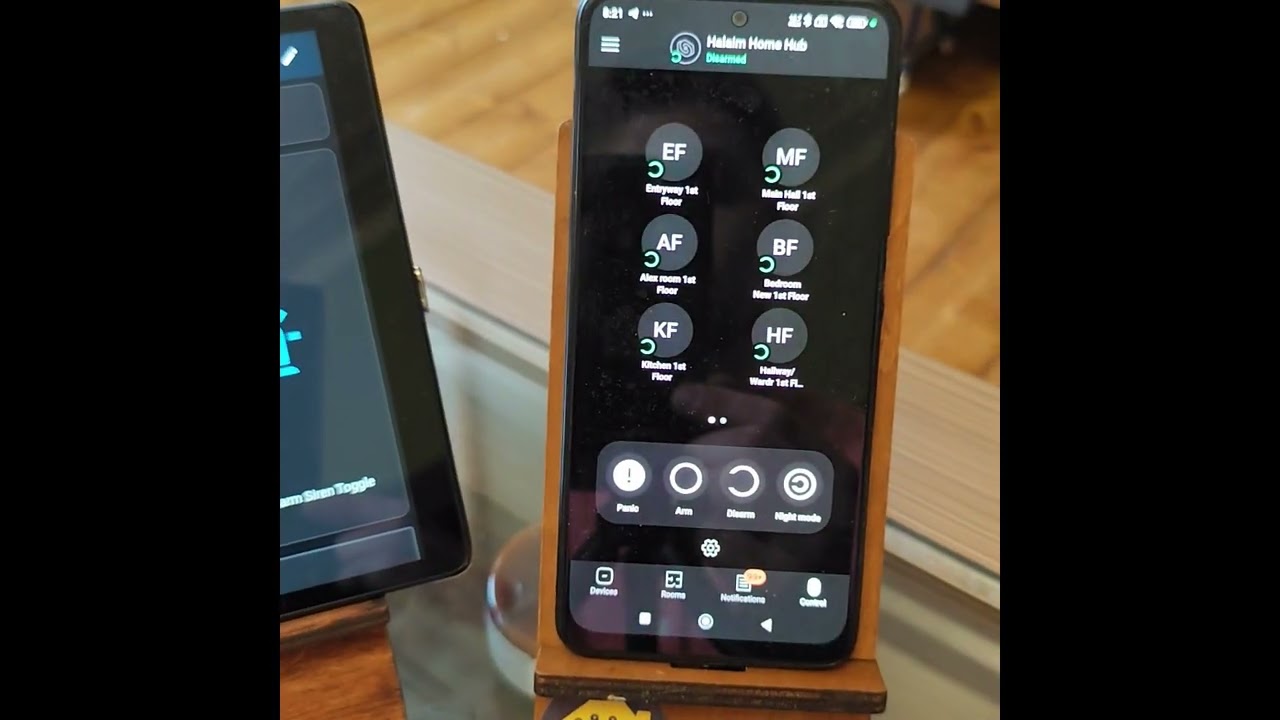
Video: AJAX Security - Home Assistant Integration Demonstration - Smart Homes / Alexei H.
Frequently Asked Questions
1. What does a continuity test not detect in CCTV cables?
Answer: Split pairs, high resistance connections, excessive length, crosstalk, and impedance mismatch. All of these cause intermittent problems that appear only under PoE load or at gigabit speeds. For more detail, see How to install CCTV for Offices and Commercial Buildings - UK step by step guide 2026. Also read our related guide: Seasonal CCTV Maintenance Checklist for UK Properties. Browse our in-depth home security resource at Home Security Guide. Official UK guidance on this topic: NSI.
2. What is a TDR and why do I need one for CCTV cabling?
Answer: A Time Domain Reflectometer sends a pulse down the cable and measures reflections to locate faults. It can pinpoint a break, short, or water-damaged section within 2–5% of the cable length, allowing targeted repair. For more detail, see Best CCTV cameras for Churches and Places of Worship in 2026 - UK buyer guide. Also read our related guide: Battery Camera Replacement Schedule for UK Users.
3. Do I need a cable certifier for CCTV installation?
Answer: For professional installations, a cable certifier provides documented proof that each cable meets gigabit Ethernet and PoE standards. This protects the installer from warranty claims and ensures system reliability. For more detail, see Farms and Agricultural Property CCTV - ultra-long-tail-legal (2026). Also read our related guide: Camera Sunsetting: When Support Ends for IP Cameras.
4. How do I test PoE delivery on a new cable run?
Answer: Connect a PoE test load or an actual camera to the far end. Measure the voltage at the camera end with a multimeter while the camera is operating with night vision on. The voltage should be above 44 V. For more detail, see How to install CCTV for Dental and Medical Practices - UK step by step guide 2026. Also read our related guide: System Audit Checklist: Annual CCTV Review.
5. What resistance reading indicates a bad Ethernet termination?
Answer: Any conductor reading above 5 ohms for a 50-metre run, or above 10 ohms for a 100-metre run, indicates a poor termination. The conductor should read under 25 ohms absolute maximum for PoE operation. Also read our related guide: Cloud CCTV Bandwidth Cost: Hidden Broadband Caps.
Conclusion
The difference between a security system that works and one that frustrates is understanding the real-world behaviour of cameras, cables, and the environment they operate in. Manufacturers sell specifications. Installers solve problems. The questions above represent the issues that UK homeowners and businesses actually face — the ones the spec sheets do not mention.
Article by Gary Pearce, qualified security systems engineer. For a free security assessment, visit gary-pearce-home-services.pages.dev. This guide was last updated June 2026. Verify current UK regulations with the ICO.