Last updated: June 2026
It is the middle of the night. Your DVR shows a black screen for camera 4. You check the connections, jiggle the BNC connector, and the picture flickers back to life. Three days later, camera 7 does the same thing. This pattern repeats across your system until you are convinced the DVR is faulty. It is not the DVR. It is the cheapest, most overlooked component in every analogue CCTV system: the BNC connector.
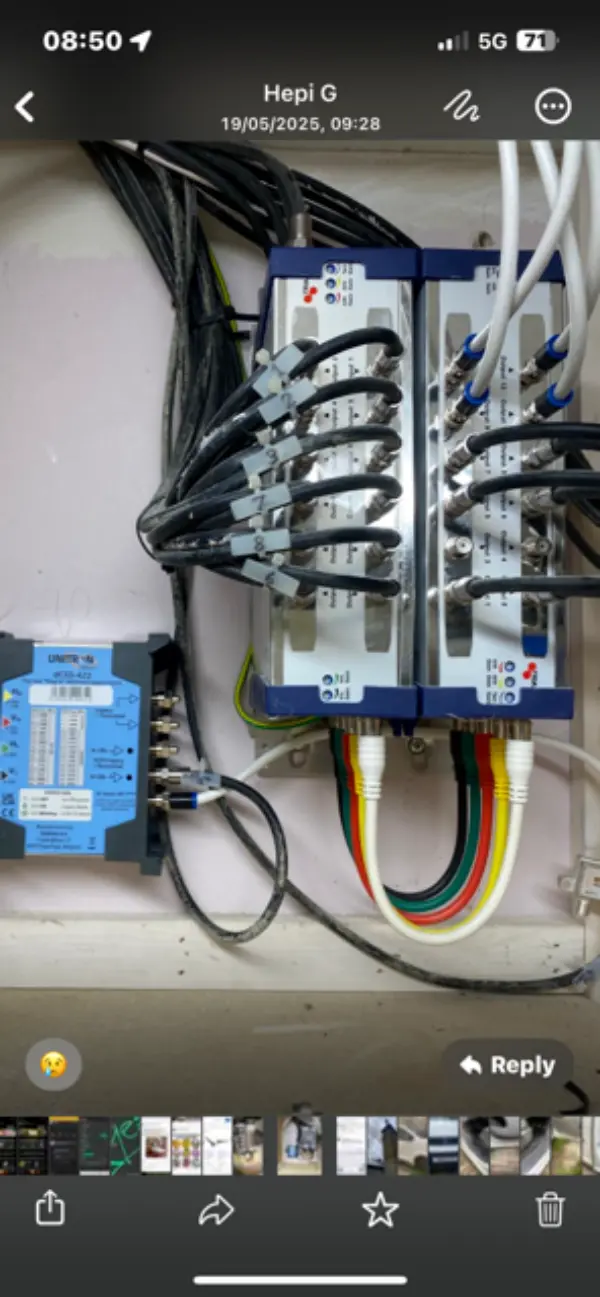
The Thermal Cycling Death Spiral
BNC connectors are mechanical devices. They rely on friction between the bayonet sleeve and the female socket to maintain electrical contact. Every day, the connector heats up slightly from current flow and ambient temperature changes. Every night, it cools down. This thermal cycling causes microscopic expansion and contraction of the metal components.
After 6-12 months of daily cycling, the spring tension in the bayonet sleeve relaxes. The centre pin develops a thin oxide layer from micro-arcing during insertion and removal. The resistance at the connection point increases. Eventually, the signal degrades below the DVR's threshold, and the channel goes dark. The connector did not fail suddenly — it failed gradually over hundreds of thermal cycles.
Why Crimped Connectors Fail Differently Than Screw-Ons
Crimped BNC connectors use a mechanical compression to hold the centre pin and cable braid. If the crimp die is the wrong size — and most budget crimp tools come with dies calibrated for RG6, not RG59 — the compression is either too loose or too tight. Too loose creates intermittent contact when the cable moves. Too tight can break the centre conductor entirely.
Screw-on (twist-on) BNC connectors are even worse. They rely on the centre pin piercing the dielectric to contact the conductor. This piercing action creates an unreliable connection that degrades with every vibration and temperature change. Professional installers never use twist-on BNC connectors.
The Weatherproofing Lie
Every BNC connector sold for outdoor use claims to be weatherproof. Most are not. The standard BNC-to-cable interface is a compression seal that fails when the cable moves in wind. Once moisture enters the connector, it causes galvanic corrosion between the brass centre pin and the copper conductor. This corrosion increases resistance, generates noise in the video signal, and eventually breaks the connection.
The fix is not a better BNC connector. The fix is to eliminate exposed BNC connections entirely. Use pre-terminated cables with moulded connectors, or terminate inside a sealed junction box where the connector never touches outdoor air.
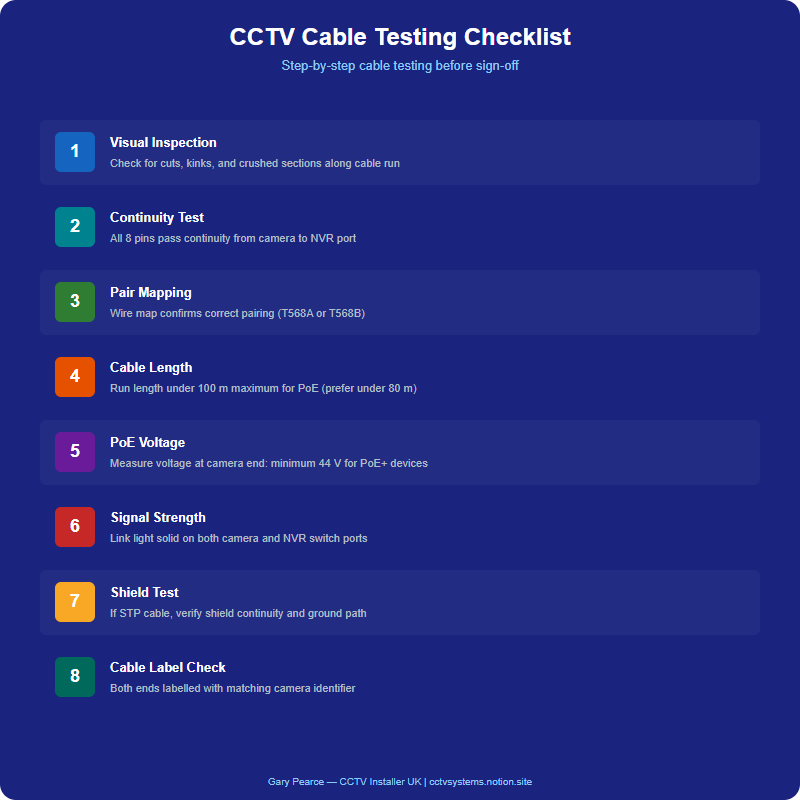
How to Diagnose a Failing BNC Without a Multimeter
Jiggle test: gently wiggle each BNC connector at the camera and DVR. If the image flickers or shows noise during the wiggle, that connector is failing. Replace it immediately. Overnight failure test: note which cameras fail. If different cameras fail on different nights, it is a connector issue. If the same camera always fails at the same time, it is a power or camera issue.

Video: DIY Security Camera Installation Guide: Pro Tips You Need — a practical walkthrough of the technology discussed in this guide.
Frequently Asked Questions
1. How long should BNC connectors last in outdoor UK conditions?
Answer: A properly crimped, weather-sealed BNC connector in a junction box should last 3-5 years. An exposed BNC connector in direct weather may fail within 6-12 months. The most common failure mode is moisture ingress through the cable end, not the connector itself. For more detail, see False Alarm Reduction CCTV - cost-guide (2026). Also read our related guide: Why Your CCTV System Eats Hard Drives: The Surveillance-Grade vs Desktop Drive Truth. Browse our security technology hub at Uni Blog Security Hub. Official UK guidance on this topic: BSI.
2. Are BNC connectors being replaced by digital connections?
Answer: IP cameras use RJ45 connectors which are more reliable than BNC. However, analogue HD formats (HD-TVI, HD-CVI, AHD) still use BNC. The connector is the weakest link in analogue systems and the primary reason many installers now prefer IP cameras entirely. For more detail, see Future of Farms and Agricultural Property CCTV in 2026 - UK trends and technology. Also read our related guide: Why Rural CCTV Cameras Die Faster: The True Cost of UK Countryside Installation Nobody Advertises.
3. Can I use dielectric grease on BNC connectors to prevent corrosion?
Answer: Yes, dielectric grease prevents moisture ingress and corrosion. Apply a small amount to the centre pin and the outer contact before mating. Do not over-apply — grease is non-conductive and excess can insulate the contact surfaces. For more detail, see Data Cabling Darlington 2026 Audit. Also read our related guide: The Dawn Fog Problem: Why Your UK CCTV Camera Goes Blind Every Morning Between 5 and 7 AM.
4. Does the quality of BNC connector matter between brands?
Answer: Significantly. A high-quality compression BNC from Amphenol or Canare costs 5x more than a generic twist-on BNC but maintains reliable contact for 10x longer. In CCTV installation, the cost of labour to replace a failed connector far exceeds the cost of buying quality connectors the first time. For more detail, see How much does Retail Shops and Stores CCTV cost in 2026? UK prices explained. Also read our related guide: Why Wasps Build Nests Inside CCTV Camera Housings and How to Stop Them Without Poison.
5. Why does jiggling the connector temporarily fix the picture?
Answer: Jiggling scrapes through the oxide layer on the centre pin and re-establishes metal-to-metal contact. The oxide reforms within hours to days depending on humidity. The fix is temporary and indicates the connector needs replacement, not periodic jiggling. Also read our related guide: Why Your CCTV Motion Detection Fails in the Rain: The Optical Flow Blindness That No Sensitivity Setting Fixes.
Conclusion
The difference between a security system that works and one that frustrates is understanding the real-world behaviour of cameras, cables, and the environment they operate in. Manufacturers sell specifications. Installers solve problems. The questions above represent the issues that UK homeowners and businesses actually face — the ones the spec sheets do not mention.
Article by Gary Pearce, qualified security systems engineer. For a free security assessment, visit gary-pearce-home-services.pages.dev. This guide was last updated June 2026. Verify current UK regulations with the ICO.