Last updated: June 2026
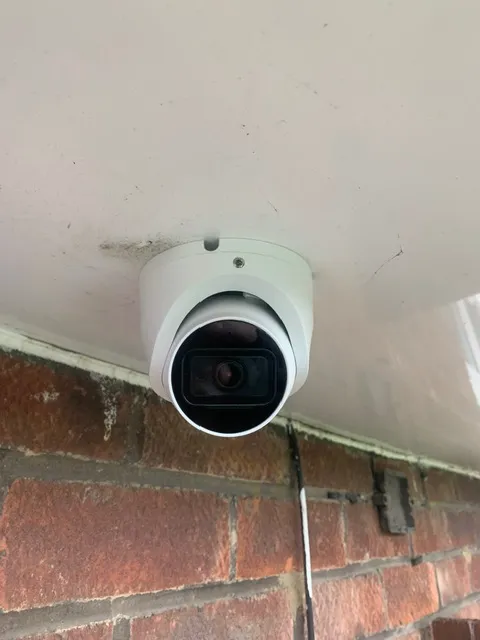
A security camera that appears slightly soft or out of focus, particularly at night when the IR cut filter switches, has a back focus problem. Back focus is the distance between the lens mounting flange and the image sensor plane. When this distance is incorrect, the lens cannot focus sharply across all lighting conditions. Back focus adjustment is a mechanical calibration that most installers overlook, resulting in cameras that produce acceptable daytime images but soft night-time footage.
What Back Focus Is and Why It Changes
The back focus distance is set at the factory for the lens installed on the camera. Temperature changes affect the lens barrel and sensor mounting materials, causing the back focus distance to shift slightly. When the camera switches between day mode (IR filter in place) and night mode (IR filter removed), the optical path changes by the thickness of the filter (typically 0.5–1 mm). The autofocus mechanism should compensate for this shift, but on budget cameras with fixed-focus lenses, the day and night focus positions may differ. The image is sharp in day mode but soft in night mode because the focal plane has shifted.
How to Check if Your Camera Has a Back Focus Problem
Capture a test image of a detailed target (a brick wall or printed test chart) at 5–10 metres in full daylight. Switch the camera to night mode by covering the light sensor or forcing night mode through the camera interface. Capture the same image. Compare the two images at 100% zoom on a computer monitor. If the night image is noticeably softer than the day image, the camera has a back focus mismatch. The same test can reveal a camera that has always been slightly out of focus: if both day and night images are soft, the back focus was never correctly set at installation.
Adjusting Back Focus on Cameras That Support It
Cameras with a back focus adjustment ring (typically a knurled ring behind the lens mounting flange) can be mechanically adjusted. Loosen the locking screw on the adjustment ring. Set the camera to night mode (IR filter removed). Point the camera at a detailed target at the intended surveillance distance. Rotate the back focus adjustment ring while watching the live image on a test monitor at maximum zoom. Stop when the image is at maximum sharpness. Tighten the locking screw. Switch to day mode and verify the image remains sharp. Repeat the adjustment if day and night images differ significantly. The correct back focus is a compromise that produces acceptable sharpness in both modes.
When Back Focus Cannot Be Fixed
Budget cameras with fixed lenses (no adjustment ring) cannot have their back focus adjusted. If such a camera produces soft images, the factory calibration was incorrect and the camera should be returned under warranty. Some varifocal cameras have the back focus adjustment integrated into the zoom and focus rings: after setting the zoom position, adjust the focus ring for maximum sharpness while cycling between day and night mode to find the best compromise. Motorised varifocal cameras with autofocus typically handle back focus automatically, but the autofocus may need several hours to converge on the optimal setting for a particular scene.
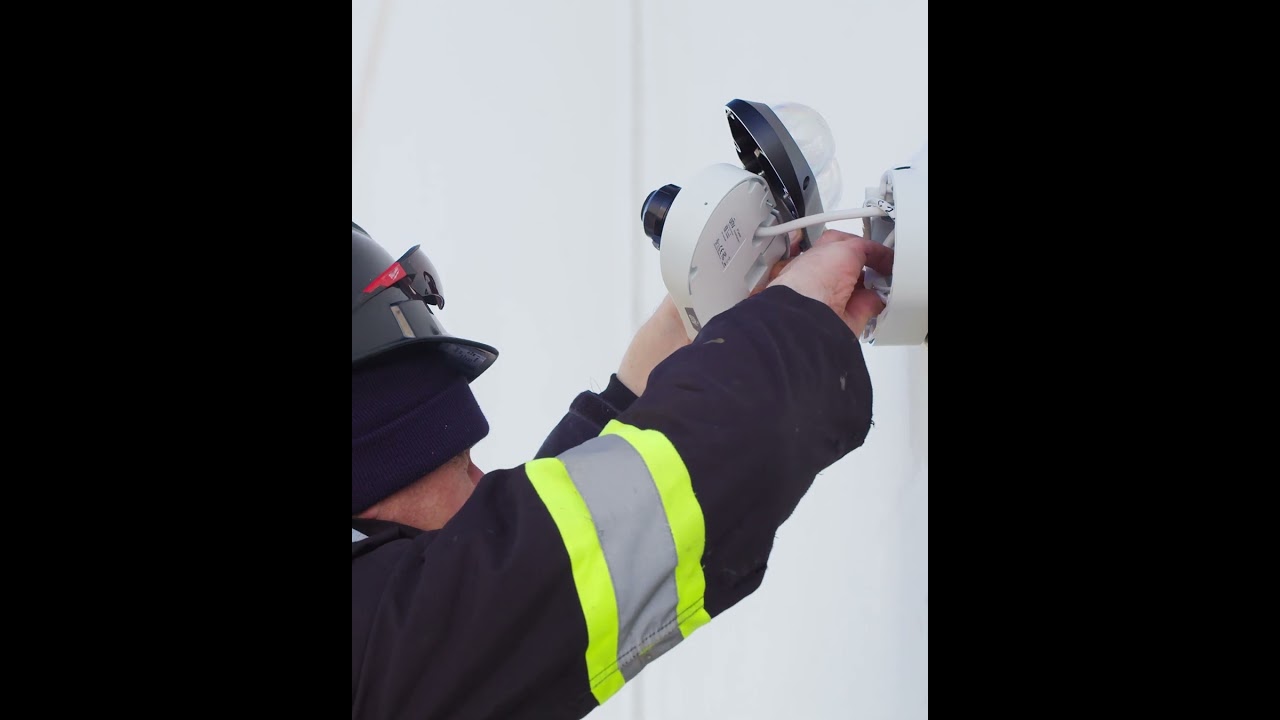
Video: How to install Uniview 4MP Dual Dome Camera (IPC3224SS-ADF28K-I1)
Frequently Asked Questions
1. Why is my CCTV camera sharp in daytime but blurry at night?
Answer: This is a back focus problem: the focus plane shifts when the IR cut filter moves between day and night mode. The camera needs mechanical back focus adjustment to optimise sharpness for both modes. For more detail, see Can I record CCTV footage of staff in break areas or welfare facilities? UK Warehouses and Logistics CCTV rules explained 2026. Also read our related guide: Shutter Speed Settings for Number Plate Capture. Browse our security technology hub at Uni Blog Security Hub. Official UK guidance on this topic: Surrey Security Centre.
2. Can I fix back focus on any camera?
Answer: Only cameras with a back focus adjustment ring (behind the lens) can be mechanically adjusted. Budget cameras with fixed-focus lenses cannot be adjusted and may need replacement if the factory calibration is incorrect. For more detail, see Does Self Storage Facilities CCTV reduce insurance premiums in 2026? UK guide. Also read our related guide: Camera MAC Address Security: Spoofing Risks.
3. How do I adjust back focus on a CCTV camera?
Answer: Set the camera to night mode, point at a detailed target at the surveillance distance, loosen the back focus adjustment ring lock screw, rotate the ring while watching the image at maximum zoom, stop at maximum sharpness, and tighten the lock screw. For more detail, see Schools and Education Settings CCTV - UK legal requirements and GDPR compliance 2026. Also read our related guide: SNMP for CCTV Camera Monitoring: Uptime and Bandwidth.
4. Does motorised varifocal zoom fix back focus?
Answer: Motorised varifocal cameras with autofocus typically handle back focus automatically. The autofocus mechanism compensates for the IR filter shift. However, the autofocus may take several hours to converge for a new scene. For more detail, see How to install CCTV for Dental and Medical Practices - UK step by step guide 2026. Also read our related guide: VLAN for Camera Isolation: Network Security Best Practice.
5. Is soft image quality always a back focus problem?
Answer: No. Soft images can also be caused by condensation on the dome, incorrect sharpness settings in the camera configuration, or a low-quality lens. Diagnose back focus by comparing day and night sharpness of the same scene. Also read our related guide: Multicast vs Unicast for Multi-Viewer CCTV Setups.
Conclusion
The difference between a security system that works and one that frustrates is understanding the real-world behaviour of cameras, cables, and the environment they operate in. Manufacturers sell specifications. Installers solve problems. The questions above represent the issues that UK homeowners and businesses actually face — the ones the spec sheets do not mention.
Article by Gary Pearce, qualified security systems engineer. For a free security assessment, visit gary-pearce-home-services.pages.dev. This guide was last updated June 2026. Verify current UK regulations with the ICO.